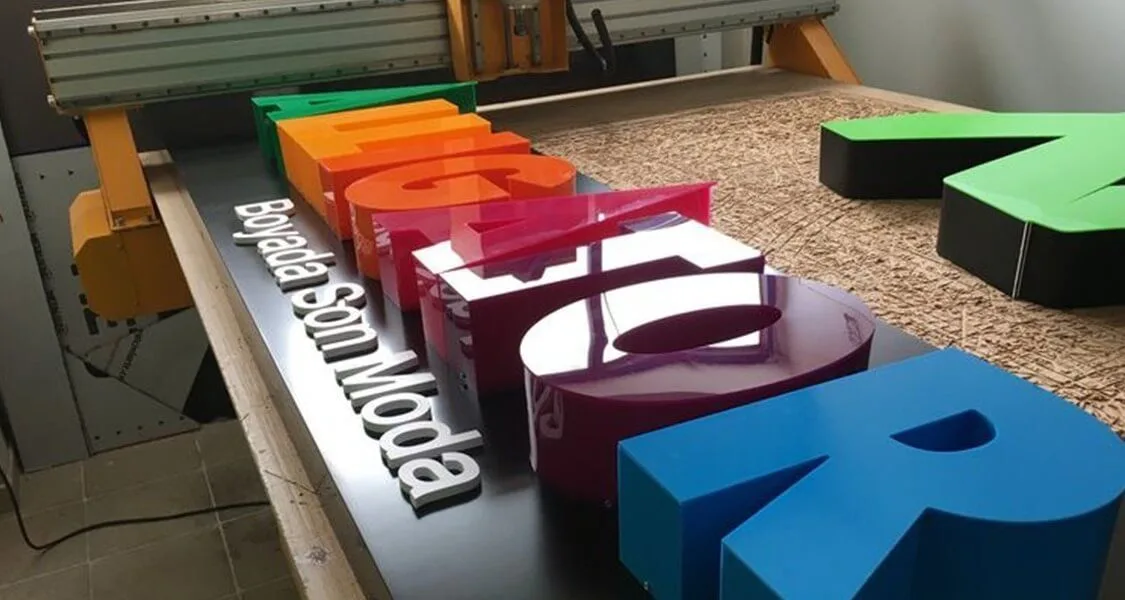
Wayfinding systems · Ajman factory

Campus Wayfinding Signage for Dubai, Sharjah, Ajman & Abu Dhabi

Bayan Signage plans, fabricates and installs campus wayfinding signage for universities, schools, hospitals and business parks. We map the routes, settle the names and sign hierarchy, then build every monolith, fingerpost and map board in our Ajman factory on welded galvanised frames, with a 5-year outdoor warranty on structure, powder coat and LEDs.

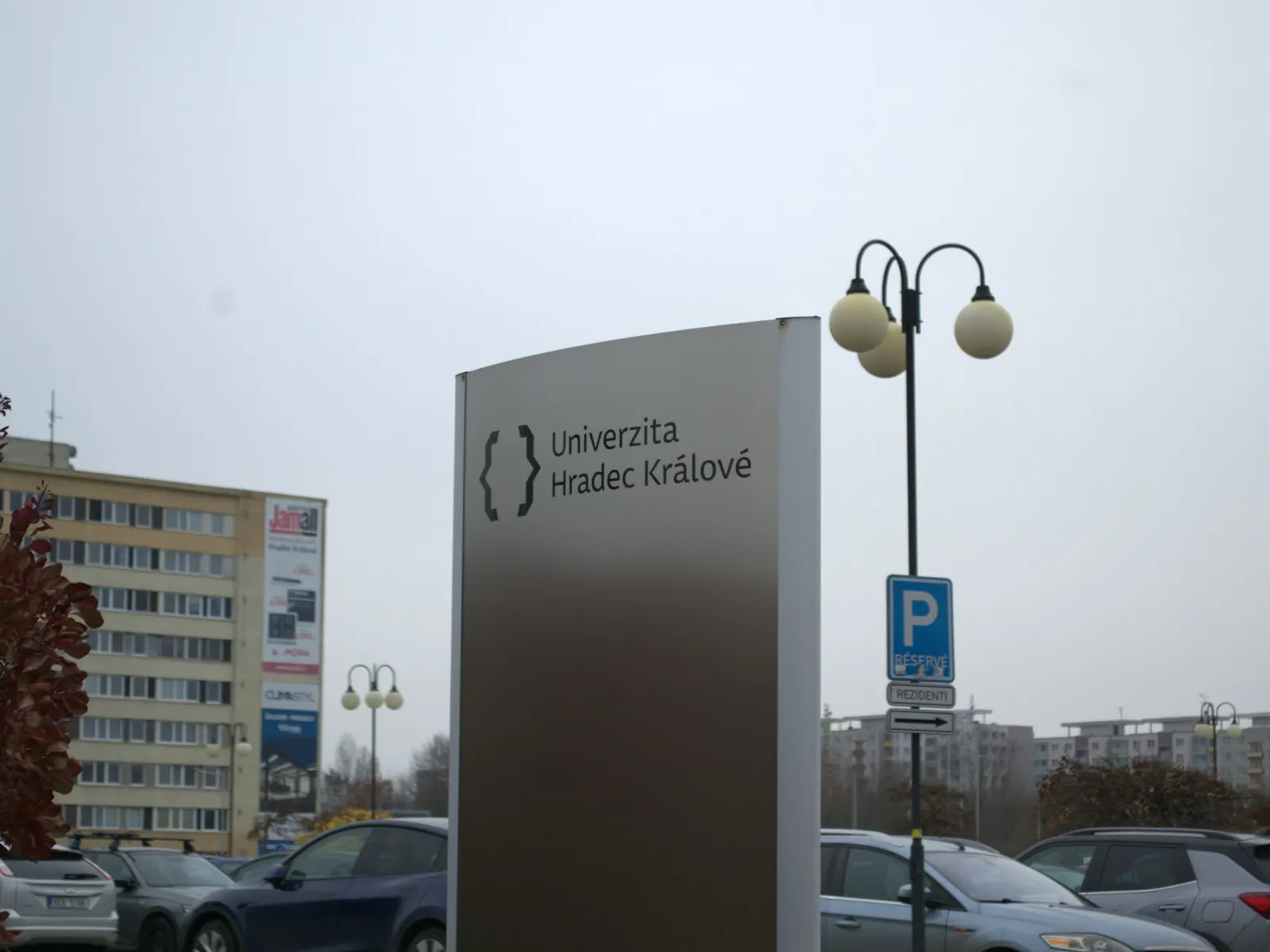
Modern brushed metal campus wayfinding totem at a university entrance beside a car park
Illustrative photo · Unsplash
2016Factory established in Ajman
500+Clients across the UAE
In-houseDesign, fabrication and installation
24 hTypical quote turnaround
Prepared by Bayan Signage production & estimating teamFactory: Alam Square, Industrial Area 2, AjmanUpdated
Campus Wayfinding Signs in the UAE

Campus wayfinding signage as one system

Campus wayfinding signage is the family of outdoor signs that guides people from the site entrance to the right building, car park or door: entrance monuments, vehicle directionals, pedestrian fingerposts, map boards and building identification signs. Most UAE campuses did not open in one go. A school adds a sports hall, a university gains a research block, a business park sells two more plots, and each phase brings its own contractor and its own signs. Pulling that back into one clear system is the job, for estates managers, consultants and developers alike.

A good system usually has fewer signs than a bad one, because each sign sits at a genuine decision point and says only what is needed there. The difference comes from planning, not metalwork: a naming logic for buildings and zones, a hierarchy of five or six sign types, and a kit of parts that can be extended when the next block opens. We plan the routes on your site plan, then fabricate every sign type in our own factory, so a fingerpost made in year five matches the ones made on day one.

Bayan Signage has fabricated outdoor signage in Ajman since 2016, as the production arm of Bayan Advertising, which has 15 years in the UAE. Our draftsmen prepare structural drawings and authority submissions, our welders build the galvanised steel frames, and our crews install the signs across all seven emirates. With more than 500 clients, including national retail groups and international brands, we are used to sites where dozens of signs must be delivered in phases around live operations.

Trusted by 500+ UAE businesses, including

Al-Futtaim logoAl Ghurair logoMultiply Group logoAriston Group logoCARS24 logoDouble A logo
Our process

How we deliver campus wayfinding signage from our Ajman factory

  1. Route survey

    We walk the site from every entrance, photograph each decision point and note sightlines, kerbs, levels and underground services. The survey is free in Dubai, Sharjah and Ajman.

  2. Names and sign schedule

    We agree building and zone names with you, then produce a schedule listing every sign, its location, type and exact message in Arabic and English.

  3. Design family and drawings

    Designers develop the sign family and show it on photos of your site; draftsmen then produce structural drawings, base fixing details and authority submissions for signs facing public roads.

  4. Frame welding and cladding

    Galvanised steel frames are welded in our factory, clad in CNC-routed ACP or aluminium, and powder-coated to your RAL colours before any graphics are applied.

  5. Graphics, lighting and inspection

    Graphics are applied in 3M cast vinyl or UV-printed and laminated. Lit signs are wired and run at full brightness, and every sign is checked against the schedule.

  6. Phased installation

    Our crews install signs in an agreed sequence around school or campus hours, working to the bases agreed with your contractor, and hand over an updated schedule and drawings for future additions.

Specification

Campus wayfinding signage specification

This is our standard build for outdoor campus signs. We adjust it to the site, the exposure and the design family, and itemise every change.

ComponentOur standardUpgrade optionsWhy it matters
StructureWelded galvanised steel frameHeavier sections for tall monoliths and exposed sitesGalvanising protects the hidden steel that carries the sign for its whole life.
CladdingACP or aluminium, powder-coated to RALStone or stainless details on entrance monumentsAluminium does not rust, and powder coat in light colours stays cooler in summer sun.
Graphics3M cast vinylUV print with anti-graffiti or matt laminateCast vinyl and laminates resist fading on south and west-facing panels.
MessagesFixed vinyl or printed panelsRemovable inserts or slide-in panelsInserts let you rename a building without replacing the whole sign.
LightingNone on fingerpostsInternal LEDs or external spotlights on monuments and mapsLighting matters on campuses with evening classes, events and night shifts.
Base fixingGalvanised base plate and anchor setACP-clad plinth cover to match the signFoundation needs are confirmed with your project team or main contractor at the survey, so tall signs stay upright through shamal winds.
Our work

Inside our Ajman factory

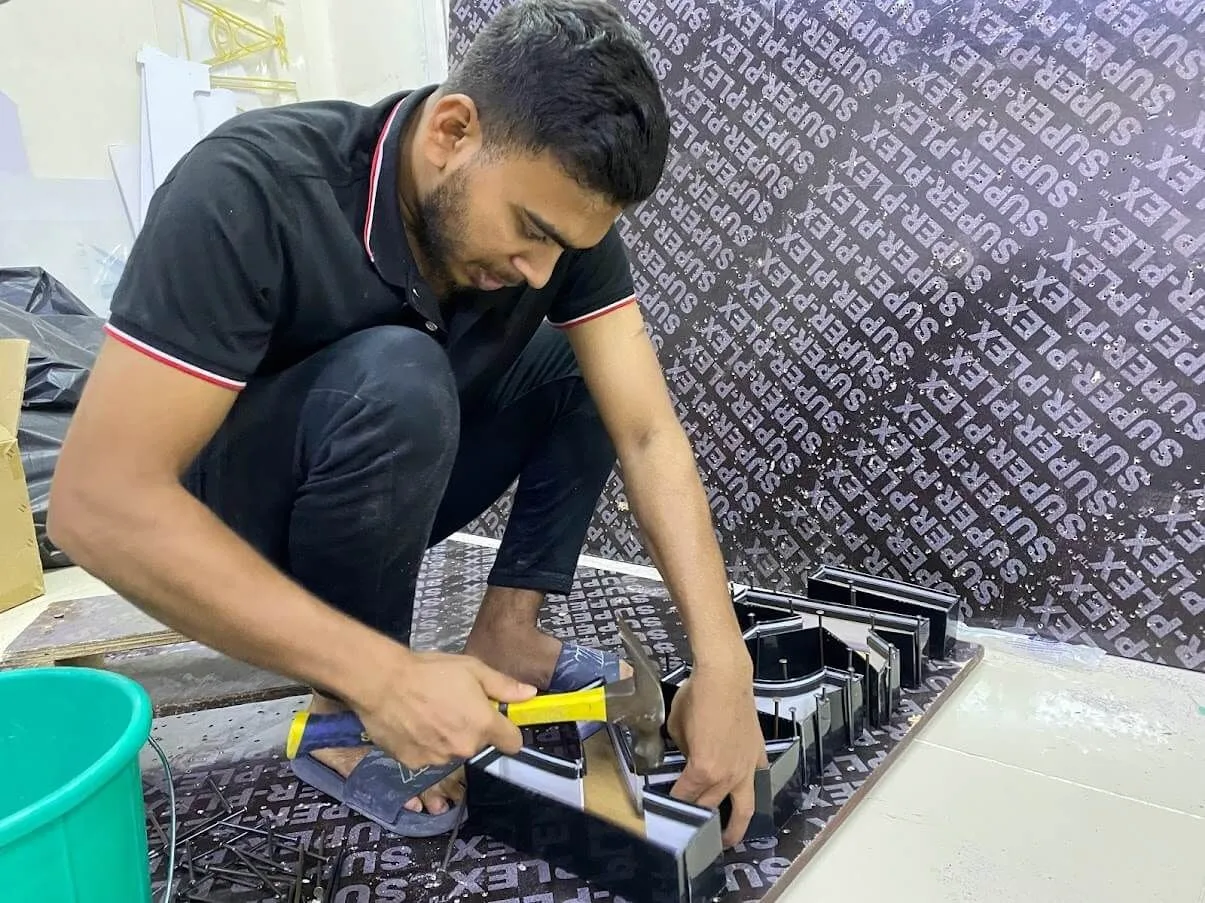
Bayan Signage technician assembling a sign in the Ajman workshop
Assembly in our Ajman workshop
CNC-cut acrylic sign parts on the router bed at the Bayan Signage factory
CNC-cut acrylic parts on the router bed
Stainless steel sign components on the fabrication bench in Ajman
Stainless steel work on the fabrication bench
Expert advice

Advice from our wayfinding planners

Most campus signage problems are not about signs at all. They come from names, routes and phasing, so these are the points we settle before we draw.

Fix the names before the signs

If the client cannot agree whether it is Block C, the Engineering Building or the Al Noor Wing, no amount of aluminium will help. We agree one name per building, one style for numbers and the Arabic versions before any design starts. The same names must then appear on the map, the directionals, the building itself and the website.

Sign decisions, not distances

On a typical university or hospital walkway, people make a decision every 60 to 120 m, and each decision point needs a sign. Between them, a reassurance sign every 150 m or so stops people doubting they are on the right path. If a route needs more signs than that, the route or the naming is usually the problem.

Separate drivers from walkers

Drivers on internal roads at 20 to 30 km/h need 100 to 150 mm text, three or four destinations per panel at most, and signs visible well before the junction. Pedestrians can read 30 to 50 mm text and more destinations. Mixing the two on one sign means it works badly for both, so we design separate vehicle and pedestrian sign types.

Design for the next phase

Campuses grow. We design panels in standard modules, keep the drawings and artwork, and leave space on key directionals for future buildings. When a new block opens, we add a panel instead of replacing the sign. Ask any supplier what happens when you add a building; the answer tells you whether you are buying a system or a set of signs.

Plan for heat and children

Dark metal posts in July sun become too hot to touch, which matters on school sites. We favour light powder-coat colours, keep hand-height surfaces shaded or non-metallic where pupils gather, and set map boards at heights children can read. Red and orange fade fastest in UAE sun, so we avoid them for critical route information.

Pricing

Campus wayfinding signage price in Dubai: what affects the cost

We price campus projects from the sign schedule, not a rate per sign. Send your site plan, building list and any design guidelines, and we usually return an itemised quote within 24 hours, with planning, fabrication, permits and installation listed separately.

Number of sign types and signs

Each new sign type needs its own design and drawings; repeating types across the site keeps the cost of each sign down.

Size and structure

Tall monoliths and entrance monuments need heavier frames, larger base plates and lifting equipment compared with simple fingerposts, and their foundation requirements are agreed with your contractor at survey.

Cladding and finishes

Powder-coated aluminium is the most economical; stone, stainless details and custom shapes add material and labour.

Illumination

Lit monuments and map boards need LEDs, drivers, cabling and a power supply, which may involve trenching across the site.

Planning and survey scope

A full route survey, naming workshop and sign schedule for a large campus takes more time than adding signs to an existing system.

Approvals and phasing

Signs facing public roads need authority submissions, and installation phased around term dates or hospital operations adds visits.

Approvals

Campus wayfinding signage approvals in the UAE

Signs inside a private campus often need only the owner's approval, but entrance signs facing public roads usually need municipality approval, and signs near RTA roads may have setback and visibility rules. Master developers and free zones, such as TECOM's education clusters in Dubai or the Abu Dhabi free zones, typically publish their own design criteria as well.

Our draftsmen prepare the structural drawings, elevations and specifications for each submission, and design to accessibility guidance such as the Dubai Universal Design Code where the project follows it. Rules differ between emirates, developers and plots, so we confirm the current requirements for your campus during the survey.

Why Bayan Signage

Why clients choose Bayan Signage for campus wayfinding signage

Planning and production together

The team that plans your routes also builds the signs, so the schedule and the fabrication drawings never drift apart.

Frames welded in-house

Galvanised steel frames, CNC-routed cladding, powder coating and graphics are all produced in our Ajman factory, with no outsourced fabrication.

5-year outdoor warranty

Outdoor signs are covered for 5 years on structure, powder coat and LEDs, with a warranty document at handover.

Approvals handled

Our draftsmen prepare submissions for municipalities, positions near RTA roads and master developers, and follow each one through to approval.

Built to grow

We keep every drawing and artwork file, so signs for the next building match the existing system without a redesign.

Installed around your operations

Our crews install in phases around school hours, exams, clinics and events, on campuses across all seven emirates.

FAQ

Campus Wayfinding Signs questions we are asked most

How much does campus wayfinding signage cost in the UAE?

It depends on the number of sign types and signs, their size and structure, the finishes, any lighting and the approvals needed. A school needing a dozen fingerposts costs far less than a university campus with lit monuments, maps and vehicle signs. Send your site plan and building list, and we will send an itemised quote, usually within 24 hours.

How long does a campus wayfinding project take?

It depends on the number of signs, how settled the building names are and which authorities need to approve the road-facing signs. Larger campuses need time for the route survey, naming, design approval and submissions before fabrication starts. We give you a realistic programme with the quote, split into phases, so the most important routes can be signed first.

Do campus signs need a permit?

Signs inside a private campus often need only the owner's or developer's approval. Entrance signs facing public roads usually need municipality approval, and positions near RTA roads may have extra rules. Free zones and master developers have their own criteria. We prepare the submissions and confirm the current requirement for your site.

How long do outdoor campus signs last in UAE weather?

Galvanised frames, powder-coated aluminium and cast vinyl typically last many years outdoors, and our outdoor signs carry a 5-year warranty on structure, powder coat and LEDs. Graphics on south and west-facing panels fade fastest, so we use UV-resistant films and laminates and design messages to be replaceable without changing the structure.

Can you add signs to our existing campus system?

Yes. We survey the existing signs, measure and match the profiles, colours and typography, and produce new signs that sit in the same family. If no drawings exist, we create them, so future additions are simpler. Where existing signs are in poor condition, we can also refurbish or reface them.

Should campus signs be in Arabic and English?

In the UAE, yes, in almost every case. We decide early which language leads, keep arrows in consistent positions and let Arabic keep its natural proportions instead of squeezing it to match the English line length. All Arabic text is checked before production, because a mistake repeated on fifty signs is expensive.

Is digital signage better than static campus signs?

Digital screens are useful for event information and changing messages at a few key points, but they need power, content management and maintenance. Static signs are cheaper, work without power and are more reliable for permanent routes. Most campuses use static signs for wayfinding and a small number of screens, which we supply and install, for news and events.

Do you maintain campus signs after installation?

Yes. We offer maintenance contracts covering cleaning, graphic replacement, LED checks and structural inspections, and we can refresh messages when buildings are renamed. Because we keep the drawings and artwork, replacement panels match the originals exactly.
Free quote

Get a quote for campus wayfinding signs

Send your logo, the fascia size and a site photo. Our estimating team replies with options and an itemised price, usually within 24 hours.

  • Call or WhatsApp +971 56 637 2656
  • Workshop: Alam Square, Industrial Area 2, Ajman
  • Sunday to Thursday, 08:00 to 18:00