Directional sign fabricator · Ajman

Freestanding Directional Signs for Dubai, Sharjah, Ajman & Abu Dhabi

Bayan Signage builds freestanding directional signs for car parks, internal roads, walkways and forecourts: post-and-panel signs, fingerposts and directional totems. We size each post for wind, weld the galvanised frames in our Ajman factory, set every sign where the sightline actually works, and cover the structure, powder coat and LEDs with a 5-year outdoor warranty.

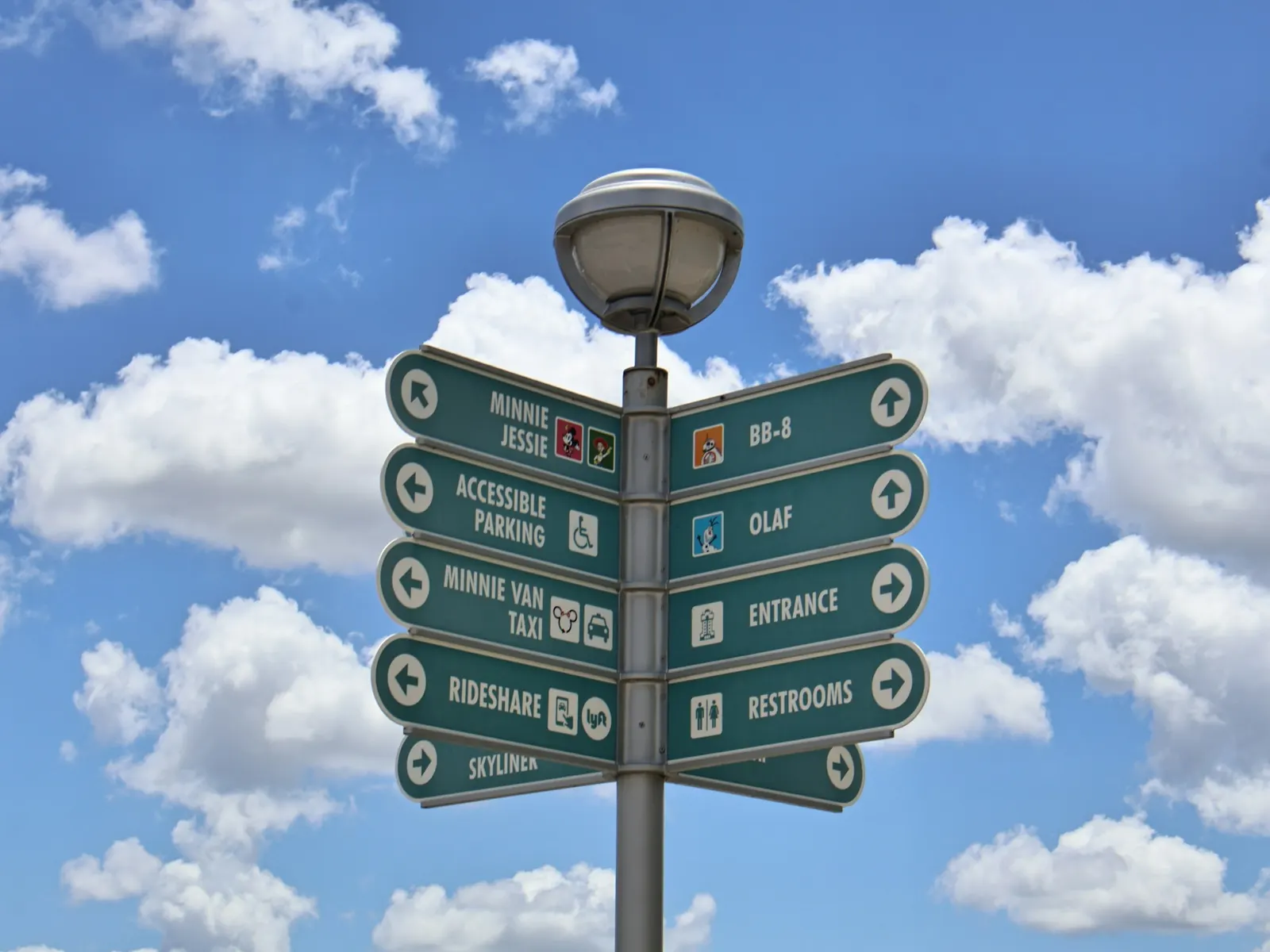
Freestanding directional sign post with multiple arrow panels and a lamp against a blue sky
Illustrative photo · Unsplash
2016Factory established in Ajman
500+Clients across the UAE
In-houseDesign, fabrication and installation
24 hTypical quote turnaround
Prepared by Bayan Signage production & estimating teamFactory: Alam Square, Industrial Area 2, AjmanUpdated
Freestanding Directional Signs in the UAE

Freestanding directional signs built for the decision point

A freestanding directional sign is a post-mounted or self-supporting sign that points drivers and pedestrians to destinations where there is no wall in the right place. On most UAE sites that means car parks, internal roads, landscaped walkways and the wide forecourts in front of malls, hospitals, towers and labour accommodation. These signs are judged in a single moment: a driver approaches a junction, glances at the panel, and either turns with confidence or brakes and hesitates. Facility managers, developers and contractors order them for new sites and to fix confusing old ones.

Most of what makes a freestanding sign last is below ground and inside the post. A panel sized without regard to wind load leans after its first shamal season. A post without anti-rotation fixings ends up pointing the wrong way after a storm. Mild steel near the sea rusts from the base up. Our draftsmen size posts, base plates and anchor bolt layouts for each panel area and exposure, our welders build galvanised steel frames in our Ajman factory, and the foundation requirement is confirmed with your project team or main contractor at the survey stage, so the base and the sign are planned together.

Bayan Signage has fabricated outdoor signage from its Ajman factory since 2016, as the production arm of Bayan Advertising, with 15 years in the UAE. We have built signs for more than 500 clients, from single car parks to national retail groups with sites across the emirates. Because one team surveys, draws, fabricates and installs, the sign that leaves our factory is the sign that was approved for that exact spot.

Trusted by 500+ UAE businesses, including

Al-Futtaim logoAl Ghurair logoMultiply Group logoAriston Group logoCARS24 logoDouble A logo
Our process

How we build freestanding directional signs in our Ajman factory

  1. Sightline survey

    We drive and walk every approach, mark where the sign is first visible, and check for palm trees, lamp posts, kerbs and underground services. The survey is free in Dubai, Sharjah and Ajman.

  2. Message and size schedule

    Designers set text and arrow sizes for the approach speed, limit each panel to what can be read in about two seconds, and list every sign's message in Arabic and English.

  3. Structural design

    Draftsmen size posts, base plates and anchor layouts for the panel area and site exposure, set out the loads the base must carry, and prepare drawings for any submission to the municipality or developer.

  4. Welding and finishing

    Galvanised steel posts and frames are welded in-house, panels are CNC-routed from aluminium or ACP, and everything is powder-coated to your RAL colour before graphics go on.

  5. Graphics and inspection

    Messages are applied in 3M cast vinyl or reflective sheeting, and every sign is checked against the schedule for wording, arrow direction and colour before dispatch.

  6. Installation and handover

    Our crews set out anchor positions with templates, fix and plumb each sign on its prepared base or slab, tighten the anti-rotation plates, and check the final view from the approach.

Specification

Freestanding directional sign specification

This is our starting point for a permanent outdoor directional. We adjust it for coastal sites, panel size and night visibility, with each change shown on the quote.

ComponentOur standardUpgrade optionsWhy it matters
Posts and frameWelded galvanised steelAluminium extrusion posts, stainless trimsGalvanising protects the steel inside the post, where rust starts unseen.
PanelsAluminium or ACP, powder-coatedDouble-sided panels, curved or custom profilesAluminium will not rust, and powder coat holds its colour in UAE sun.
Graphics3M cast vinylReflective sheeting, UV print with laminateCast vinyl stays put in heat; reflective sheeting works in headlights.
FixingsGalvanised bolts with anti-rotation plates316 stainless fixings for coastal sitesAnti-rotation stops panels turning in wind; 316 resists salt air.
Base fixingGalvanised base plate with anchor bolt templateDemountable sockets, shrouded base coversA base designed around the wind load keeps signs upright through shamal season.
LightingUnlitInternal LEDs or external spotlightsEvening traffic is heavy in summer, when people go out after sunset.
Our work

Inside our Ajman factory

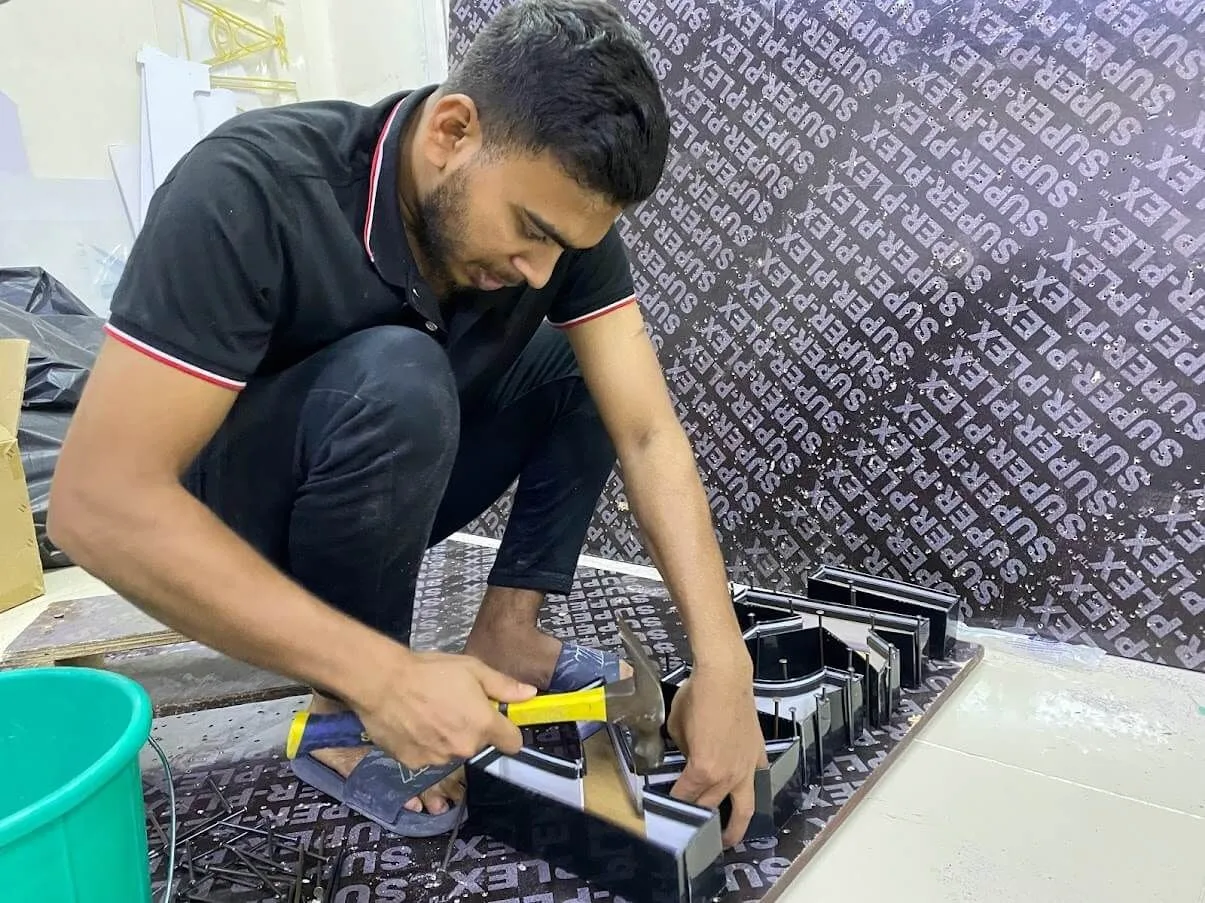
Bayan Signage technician assembling a sign in the Ajman workshop
Assembly in our Ajman workshop
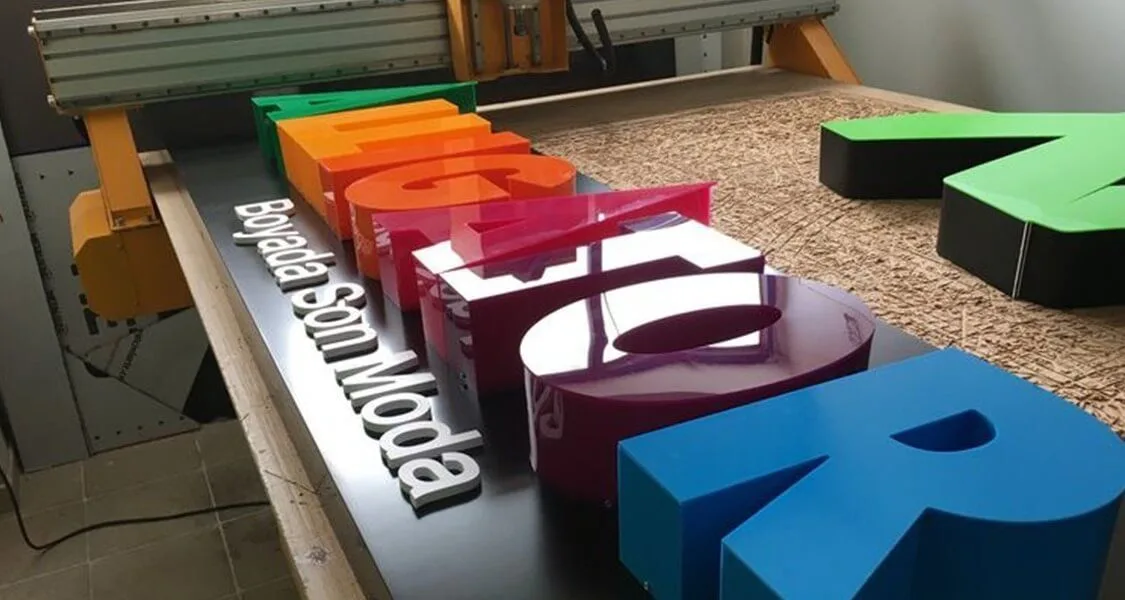
CNC-cut acrylic sign parts on the router bed at the Bayan Signage factory
CNC-cut acrylic parts on the router bed
Stainless steel sign components on the fabrication bench in Ajman
Stainless steel work on the fabrication bench
Expert advice

Advice from our site engineers

Freestanding directionals succeed or fail on placement and structure. These are the points our site team checks before anything is fabricated.

Give drivers two seconds

A driver at 20 to 40 km/h has about two seconds to read a sign. That means 100 to 150 mm cap heights, arrows at least as tall as the text, and no more than three or four destinations per panel. If a junction needs more, split the information across two signs placed in sequence, rather than one crowded panel nobody can read in time.

Place it for the approach, not the plan

Vehicle signs should be visible 30 to 50 m before the junction, and pedestrian signs as people approach the decision point, not only when they reach it. A palm tree that looks small on a drawing can hide a sign completely within two years. We always check sightlines on site, and we photograph the view from the driver's seat.

Keep clear of mirrors and heads

Set signs at least 600 mm back from the kerb edge, so wing mirrors and turning buses do not clip them. Beside footpaths, the underside of the panel should sit at least 2.1 to 2.2 m above ground, and higher where service vehicles pass. A sign that gets hit once a month is not a durability problem; it is a placement problem.

Design for the shamal

Seasonal shamal winds and sudden gusts load large panels heavily. A 1.5 square metre panel catches far more wind than most clients expect. We size posts and base plates for the panel area and exposure, use anti-rotation fixings, and avoid tall single posts for large panels. Signs that lean or twist after a storm were usually sized by guesswork, so we agree the foundation requirement with your project team at the survey.

Ask whether you need a post at all

If there is a usable wall at the decision point, a wall sign is cheaper, needs no base or post and keeps the ground clear for prams, wheelchairs and people looking at their phones. On public roads, signs must follow road authority standards, so a branded directional is the wrong tool where an RTA-style road sign is required.

Pricing

Freestanding directional sign price in Dubai: what affects the cost

We price each sign from its size, structure and position. Send a site plan with the proposed locations, the messages and some photos, and we usually return an itemised quote within 24 hours, with fabrication, graphics and installation listed separately.

Panel size and sides

Larger and double-sided panels need more material, heavier posts and larger base plates to resist wind load.

Structure type

A simple single-post sign costs far less than a twin-post panel or a clad totem with internal framing.

Graphics and reflectivity

Standard cast vinyl is the baseline; reflective sheeting for vehicle signs and printed graphics with laminate cost more.

Base and fixing conditions

Fixing to an existing slab is the simplest case; demountable sockets, shrouded bases or nearby underground services add work, which we agree at the survey.

Illumination

Lit signs need LEDs, drivers and a power supply, which may mean trenching cable from the nearest source.

Coastal and exposed sites

316 stainless fixings, sealed edges and heavier posts for waterfront and island locations add material cost.

Approvals and traffic management

Signs near public roads need authority submissions, and work beside live roads may need traffic management on site.

Approvals

Freestanding directional sign approvals in the UAE

Directional signs inside a private site often need only the owner's or master developer's approval. Signs close to roads managed by the RTA, or on municipal land, typically need approval and may have to follow road sign standards for size, colour and position. In Sharjah, Ajman and Abu Dhabi the relevant municipality applies its own rules, and free zones such as JAFZA or DMCC have their own criteria.

Our draftsmen prepare the sign drawings, structural plans and elevations for each submission and follow them through, and foundation requirements are confirmed with your project team or main contractor. On sites near public roads we check setbacks and visibility splays before fixing positions. Requirements vary by emirate, road and plot, so we confirm the current rules for your site during the survey.

Why Bayan Signage

Why clients choose Bayan Signage for freestanding directional signs

Structures welded in-house

Galvanised steel posts and frames are welded and powder-coated in our Ajman factory, so structure and panels are made to fit each other.

Base agreed before fabrication

We set out the loads and anchor layout and confirm the foundation requirement with your project team at survey, so the base suits the sign.

5-year outdoor warranty

Structure, powder coat and LEDs are covered for 5 years, with a warranty document at handover for every outdoor sign.

Placement checked on site

We survey sightlines from the driver's seat and the footpath, so each sign is visible where people actually make their decision.

Approvals prepared for you

Our draftsmen produce drawings for municipalities, RTA-related positions, master developers and free zones, and follow them through.

Itemised, honest quotes

Fabrication, structure, graphics and installation are priced separately, usually within 24 hours, so you can compare like for like.

FAQ

Freestanding Directional Signs questions we are asked most

How much does a freestanding directional sign cost in Dubai?

The cost depends on panel size, the number of faces, the structure, the base fixing, graphics and any lighting. A single-post pedestrian sign on an existing slab costs far less than a lit, double-sided totem beside a road. Send us the locations, messages and photos, and we will send an itemised quote, usually within 24 hours.

How long does it take to make and install directional signs?

It depends on the number of signs, the structure and whether an authority approval is needed, so we give you a realistic programme with the quote. Fabrication starts once drawings and messages are approved, and installation is timed around the base being ready on site. Where an approval is needed, that step runs first.

Do directional signs need a permit in Dubai?

Signs inside a private site often need only the owner's or developer's approval. Signs near RTA roads or on municipal land typically need approval and may have to follow road sign standards. Free zones have their own rules. We prepare the drawings, handle the submission and confirm the current requirement for your site.

How do you stop signs leaning or twisting in strong wind?

We size posts and base plates for the panel area and the site exposure, set anchor positions with templates, and fit anti-rotation plates between panel and post. For large panels we use twin posts rather than one tall post. Those details are why our outdoor signs carry a 5-year warranty on structure.

What is the difference between a directional sign and a totem?

A directional sign is usually a panel on one or two posts, designed purely to point the way. A totem is a self-supporting, clad structure that can carry directions, a brand and sometimes lighting, and it works as a landmark as well. Totems cost more; simple post-and-panel signs are often the better choice at car park junctions.

Can directional signs be read at night?

Yes, with the right materials. Reflective sheeting makes vehicle signs readable in headlights without power. For pedestrian signs we can add internal LEDs or external lights, usually Samsung or Epistar IP65 modules. Lighting needs a power supply at or near each sign, which we plan at the survey.

Can you update directional signs you installed for us?

Yes. For signs we made and installed, we can reface panels with new graphics when tenants or destinations change, replace damaged panels on the original posts, or relocate whole signs. Because we keep the drawings, new panels match the old ones. Our maintenance team also handles straightening, cleaning and refreshing faded graphics on our signs.

Do you install directional signs across the UAE?

Yes. Our crews install across all seven emirates from our factory in Ajman, including Abu Dhabi, Ras Al Khaimah, Umm Al Quwain and Fujairah. The site survey is free in Dubai, Sharjah and Ajman.

Free quote

Get a quote for freestanding directional signs

Send your logo, the fascia size and a site photo. Our estimating team replies with options and an itemised price, usually within 24 hours.

  • Call or WhatsApp +971 56 637 2656
  • Workshop: Alam Square, Industrial Area 2, Ajman
  • Sunday to Thursday, 08:00 to 18:00