Site measurement and survey
Measured dimensions, photos, wall construction, power location, access route and any obstructions recorded before drawings are finalised or production starts.
Every new sign or relocationOur own installation crews survey the site, choose the access method, fix the sign and hand it over working. That includes moving or refitting signs we have made when your premises change.
Installation starts with a site survey to measure the wall, check its condition and locate power. The team then picks the access method, from ladders and scaffolding to a boom lift or crane, and arranges landlord or mall work permits. The sign is fixed, connected by a qualified electrician, tested and handed over after snagging.
A well-made sign can still fail on site. Fixings that suit blockwork will not hold in a hollow ACP facade, and a letter set that looked level on a drawing may sit across a joint in the cladding. That is why every installation we do starts with a survey. We measure the actual surface, check what is behind it, and note power points, obstructions and how a lift or scaffold would reach.
Site works often go beyond fixing the sign itself. A rooftop sign may need a steel frame, and a pylon needs a suitable foundation; these structural requirements are confirmed with your project team or main contractor at the survey stage. A tired facade may need new ACP cladding as a backing panel. We plan these jobs as one programme so each trade arrives in the right order.
Measured dimensions, photos, wall construction, power location, access route and any obstructions recorded before drawings are finalised or production starts.
Every new sign or relocationFixing panels, lightboxes and individual letters with templates, studs or rails, set level and spaced to the approved drawing.
Shopfronts, receptions, building namesLarge signs fixed to facades or on roofs, usually on a steel frame, with the access method and lifting plan agreed in advance.
Building names, high-rise brandingFabricating and fixing support frames, plus ACP cladding to create a clean, strong backing for letters or to cover old fixings.
Uneven walls, new fascias, rooftopsSetting out the pylon or totem position, agreeing foundation size and anchor bolts, and coordinating the civil works before the sign is lifted in.
Forecourts, malls, compounds, showroomsCareful removal of signs we have made, making good the wall where agreed, and refitting at a new location when you move, rebrand or hand back premises.
Moves, rebrands, landlord handbacksWe measure the real wall, not the architect's facade drawing. Cladding joints, hidden beams and sprinkler pipes change where fixings can go, so the survey feeds straight into the shop drawing.
A boom lift is quick but needs firm ground and space to manoeuvre. Scaffolding takes longer to erect but suits long fascias. We pick the method that is safe for the height and acceptable to the landlord.
Work at height is usually covered by a permit-to-work and method statement on managed sites. Our crews use harnesses and certified equipment, and we follow the site's own safety rules on top of ours.
Malls and managed buildings typically need a work permit, insurance documents and a method statement before installers enter. Many only allow sign fixing after closing, so we plan night installs where required.
Illuminated signs are connected to the building supply by a qualified electrician, with isolation and protection as the site requires. Ask your landlord where the dedicated sign supply and timer will be.
After fixing, we check level, spacing, sealing and lighting, clean the sign and walk you through it. Any snags are listed and closed, and you receive photos of the finished installation.
| Access method | Typical use | Planning needed | Watch out for |
|---|---|---|---|
| Ladders and podium steps | Low indoor signs, door and reception signs | Little beyond a clear floor area | Only for short, light tasks |
| Mobile or fixed scaffolding | Shopfront fascias, long letter runs | Footpath space, landlord approval | Blocking entrances during trading hours |
| Boom or scissor lift | Facade signs at mid height, mall atriums | Ground load, access route, operator | Soft paving and basement slabs below |
| Mobile crane | Pylons, rooftop frames, large lightboxes | Lift plan, road or site permission | Wind on the day and overhead cables |
| Rope access or gondola | High-rise facades without ground access | Building's facade access system | Building management approval and timing |
| Night installation | Malls, busy roads, shared forecourts | Landlord work permit and security | Noise rules and lighting for the crew |
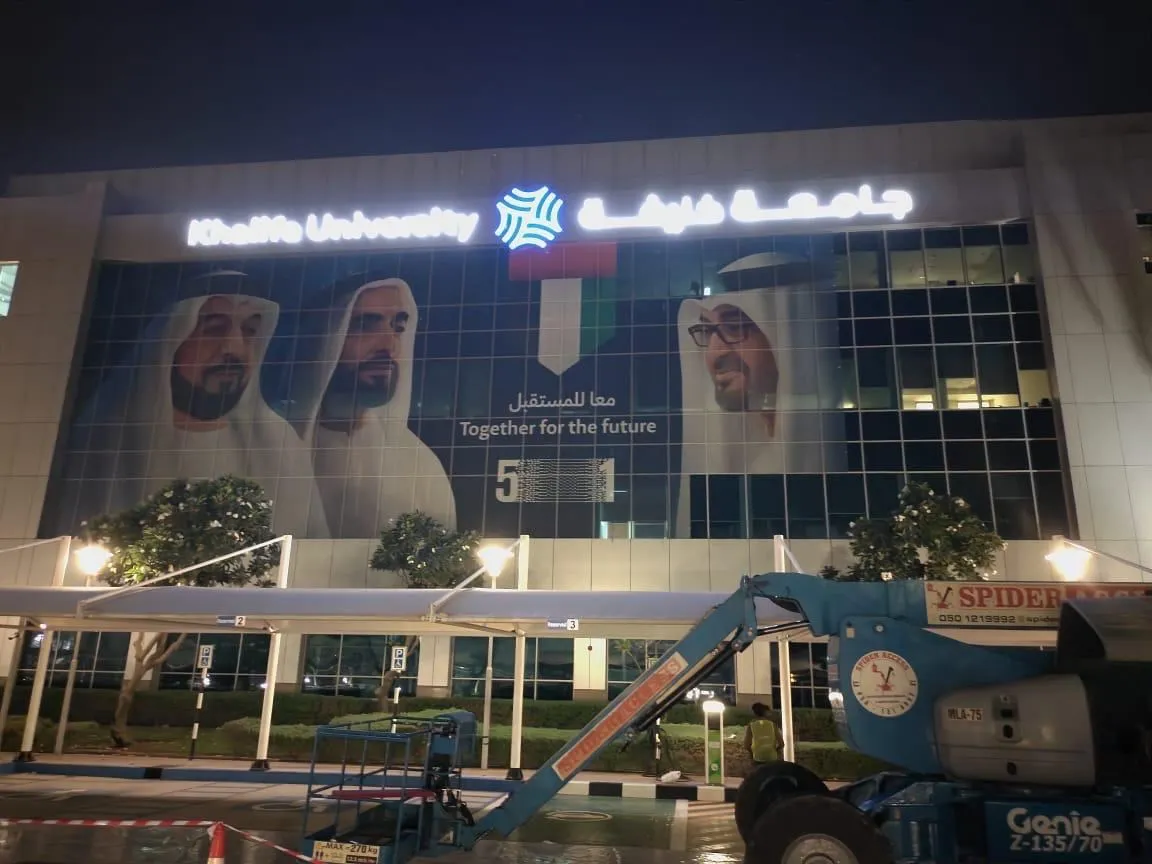
Outdoor work in peak summer heat is usually restricted around midday under UAE labour rules. We schedule outdoor installations early, late or at night during those months and confirm the current rules for the period.
Facade and rooftop signs face strong gusts and sandstorms. Anchors, frame sections and fixing spacing are chosen for the sign area and height, and we avoid fixing heavy signs into thin cladding alone.
Outdoor signs usually need approval from Dubai Municipality, Sharjah or Ajman municipality, Trakhees or the relevant free zone. Work near roads may also involve RTA. We confirm the current requirement for your site before installation.
Fixing holes and cable entries are sealed so rain and dust do not track into the wall or the sign. Coastal sites get stainless fixings to avoid rust stains running down the facade.
We measure, photograph, check the wall construction and power, and decide the access method and any frame or cladding works.
We prepare method statements, arrange landlord or mall work permits, book lifts or cranes, and agree install dates and hours.
Steel frames, ACP backing or pylon foundations are completed first, with templates marked out for letters and fixings.
The sign is lifted and fixed to the approved drawing, then connected and tested by a qualified electrician.
We check level, sealing and lighting, clean the area, close any snags and hand over with photos.
We relocate and reinstall signs that Bayan Signage made and installed. We usually inspect the sign first to check its condition, fixings and wiring, because older signs sometimes need repairs or new brackets before they go back up. We then quote for the removal, any repair and the refit at the new location.
Often, yes. Many malls and managed buildings only allow signage works after trading hours, and they usually require a work permit, method statement and insurance documents in advance. We plan the crew, access equipment and timing around the landlord's rules, so the shop can open as normal the next morning.
A qualified electrician makes the connection. The landlord or fit-out contractor usually provides a dedicated supply near the sign, and we connect the sign to it with suitable isolation and protection. If the supply is missing or not where the drawing shows, we flag it at the survey so it can be fixed before installation day.
In most cases, yes. Outdoor business signs in the UAE typically need a permit from the municipality, Trakhees or the free-zone authority covering the site, and signs near roads may involve RTA. Requirements differ by emirate and location. We confirm the current requirement for your site and handle the application as part of our service.
We choose access based on height, ground conditions and the building. Mid-height facades often use a boom lift. Very tall buildings may need a crane, rope access or the building's gondola. Work at height is usually covered by a permit-to-work and method statement, and building management approval is arranged before we start.
The main factors are height and access method, sign size and weight, the wall or roof construction, and whether frames, cladding or foundations are needed. Night work, crane hire, permits and electrical connection also affect cost. Removal of old signs is quoted separately. Send photos and dimensions for a free quote, usually within 24 hours.
Send photos of the site and the sign, and we will arrange a survey and a free installation quote.