Work zone signs · made in Ajman

Temporary Road Work Signs in Dubai, Sharjah & Abu Dhabi

Bayan Signage produces temporary road work signs for contractors, utility companies and traffic management teams across the UAE. We build each kit from your approved traffic management plan, fabricate the aluminium faces and folding frames in our Ajman factory, label every sign to its drawing reference and deliver it ready for the first phase.

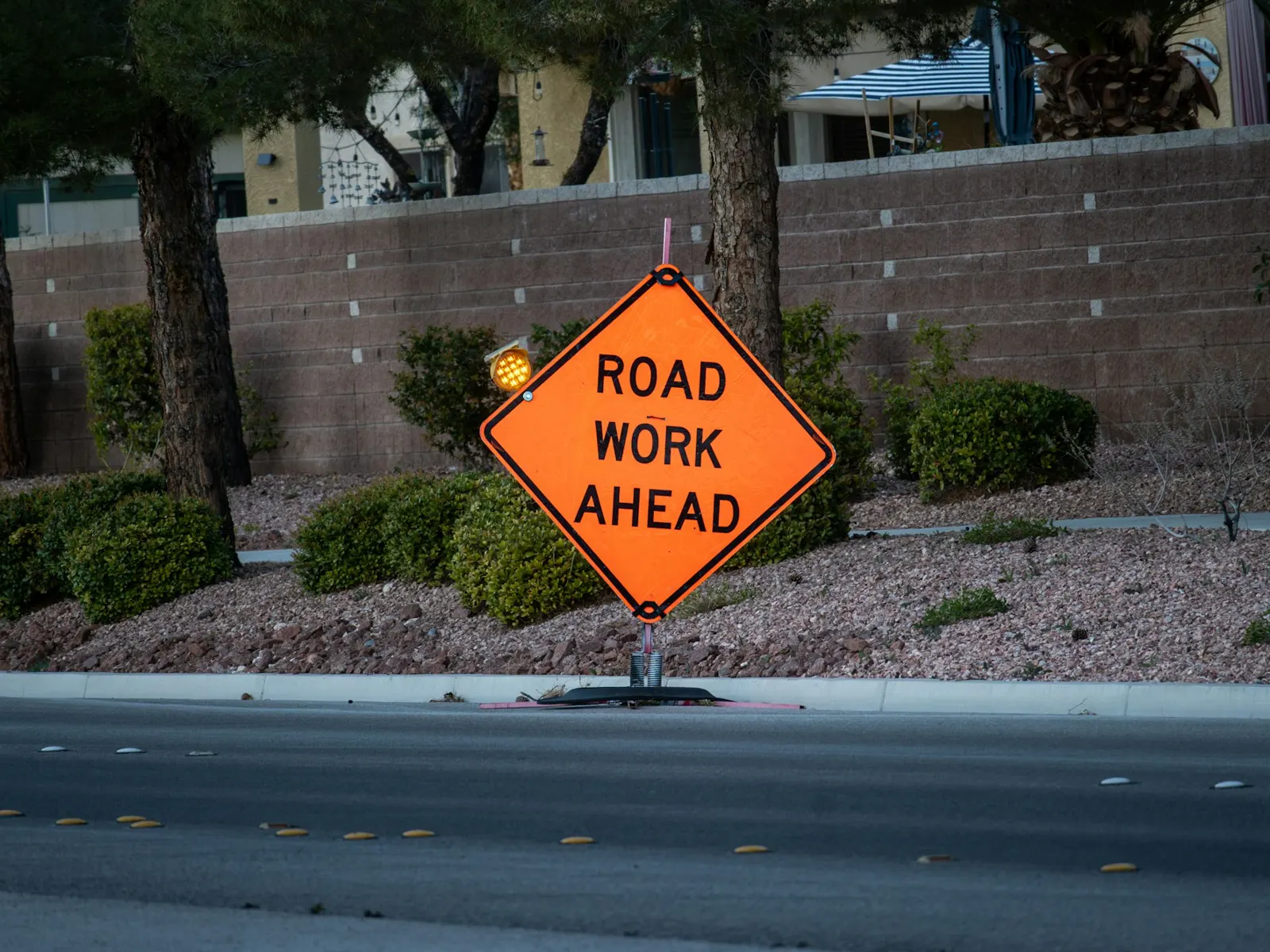
Orange temporary road work ahead sign on a stand beside a roadside kerb
Illustrative photo · Unsplash
2016Factory established in Ajman
500+Clients across the UAE
In-houseDesign, fabrication and installation
24 hTypical quote turnaround
Prepared by Bayan Signage production & estimating teamFactory: Alam Square, Industrial Area 2, AjmanUpdated
Temporary Roadwork Signs in the UAE

Road work signs built for repeated deployment

Temporary road work signs warn and guide drivers through a work zone: road works ahead, lane closed, reduced speed, keep left, diversion and end of works. They are faced with fluorescent or prismatic reflective sheeting, carried on folding frames weighted with sandbags, and moved as the work progresses. Our buyers are main contractors, utility and telecom contractors, developers working on community roads, and traffic management subcontractors who keep their own stock.

A work zone sign is handled more than any other sign we make. It is thrown onto a pickup, dropped on hot asphalt, clipped to a frame at 2 a.m., clipped by a truck mirror and stored in a yard between jobs. What makes one last is a plate with folded or braced edges, sheeting bonded right to the corners, a frame that folds without bending and supplementary plates that do not rattle loose. We build and fold-test every frame in our metal shop before it goes into a kit.

As the production arm of Bayan Advertising, which has worked in the UAE for 15 years, Bayan Signage has run its own factory in Ajman since 2016. Cutting, sheeting, welding and powder coating all happen under one roof, so a revised traffic plan becomes a corrected sign kit quickly, without waiting on an outside supplier for frames or faces.

Trusted by 500+ UAE businesses, including

Al-Futtaim logoAl Ghurair logoMultiply Group logoAriston Group logoCARS24 logoDouble A logo
Our process

How we prepare road work sign kits in our Ajman factory

  1. Traffic plan review

    We read your approved traffic management plan sign by sign, checking sizes, plates and quantities against the road speed for each section, and flag anything missing before production rather than on site.

  2. Kit schedule and artwork

    Our draftsmen turn the plan into a kit schedule for each phase, set out any custom diversion wording in Arabic and English, and send proofs for approval by your traffic engineer.

  3. Plate cutting and sheeting

    Aluminium plates are CNC-cut with radiused corners and folded or braced edges, then faced with fluorescent or prismatic sheeting laminated right to the edge so the corners do not lift.

  4. Frame fabrication and fold test

    Folding frames are cut and welded in our metal shop, finished, then opened and closed on the bench with a sign fitted to check that the clips hold and the legs lock.

  5. Labelling and packing

    Every sign and frame carries a label with its traffic plan reference, and kits are packed by phase, so the night crew matches label to drawing instead of reading every face.

  6. Delivery and remakes

    We deliver to site for the first phase and keep the artwork on file, so a damaged sign or a revised diversion plate can be remade and sent out quickly to match the kit.

Specification

Temporary road work sign specification

This is our standard build for reusable work zone kits. Where the traffic plan or the authority's work zone guidance sets a different material, size or colour, we follow it.

ComponentOur standardUpgrade optionsWhy it matters
FaceHigh intensity prismatic sheetingFluorescent orange or yellow prismaticFluorescent faces stand out by day; prismatic grades carry the sign at night in headlights.
Plate2 mm aluminium, folded or braced edgesRigid plastic plates for light, short-term useAluminium survives knocks and transport far longer than plastic, which cracks and warps in heat.
FrameFolding steel frame, powder-coatedAluminium frame for lighter handlingA frame that locks open and folds flat is quicker to deploy and safer to stack in a vehicle.
Supplementary platesClip-on distance and arrow platesTime plates and custom diversion platesClip-on plates let one frame carry different messages as the phases change.
BallastFlat frame feet sized for sandbagsWeighted rubber basesSandbags spread the load and are far safer than rocks or blocks if a vehicle strikes the sign.
LabellingPlan reference on sign and frameAsset numbers for stock controlLabels cut placement errors at night and make stock checks after the job much faster.
Our work

Inside our Ajman factory

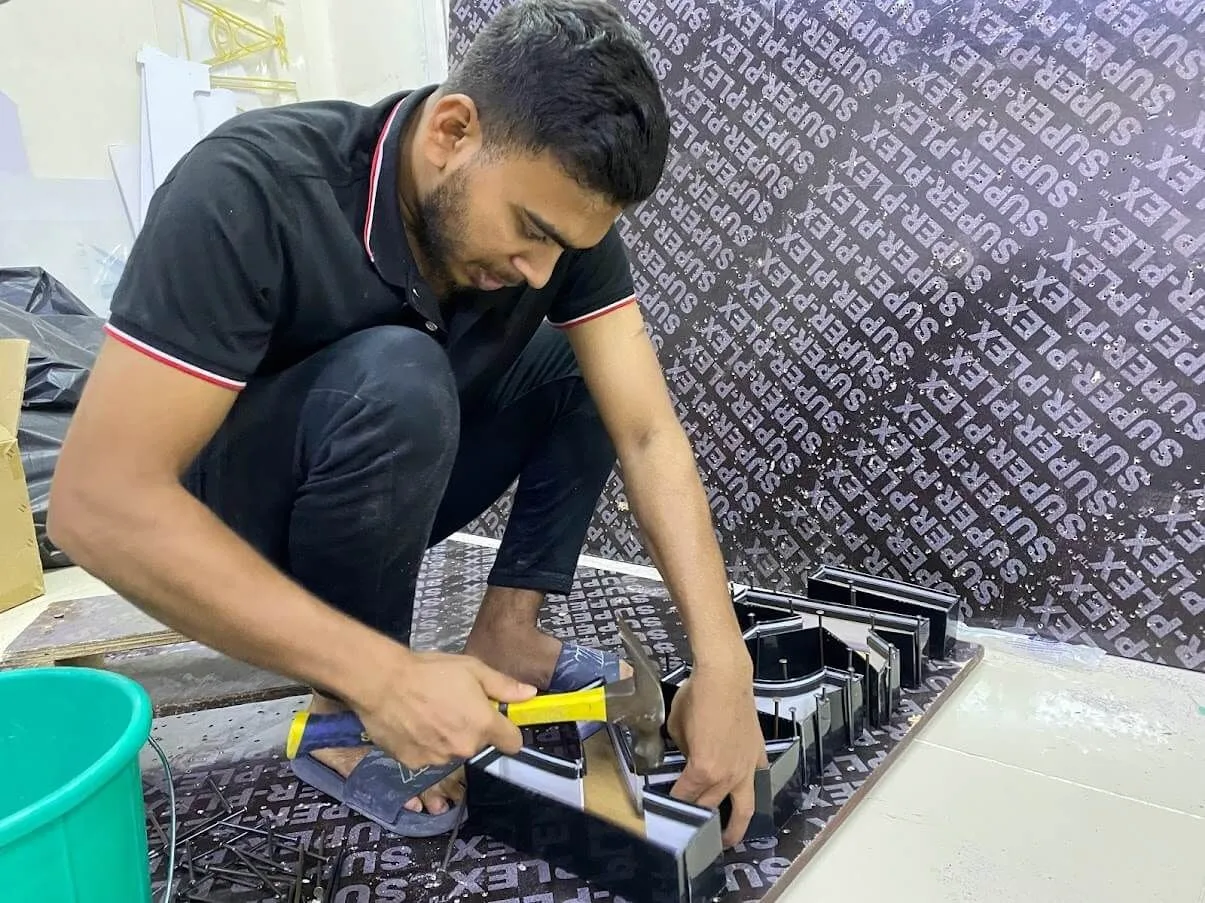
Bayan Signage technician assembling a sign in the Ajman workshop
Assembly in our Ajman workshop
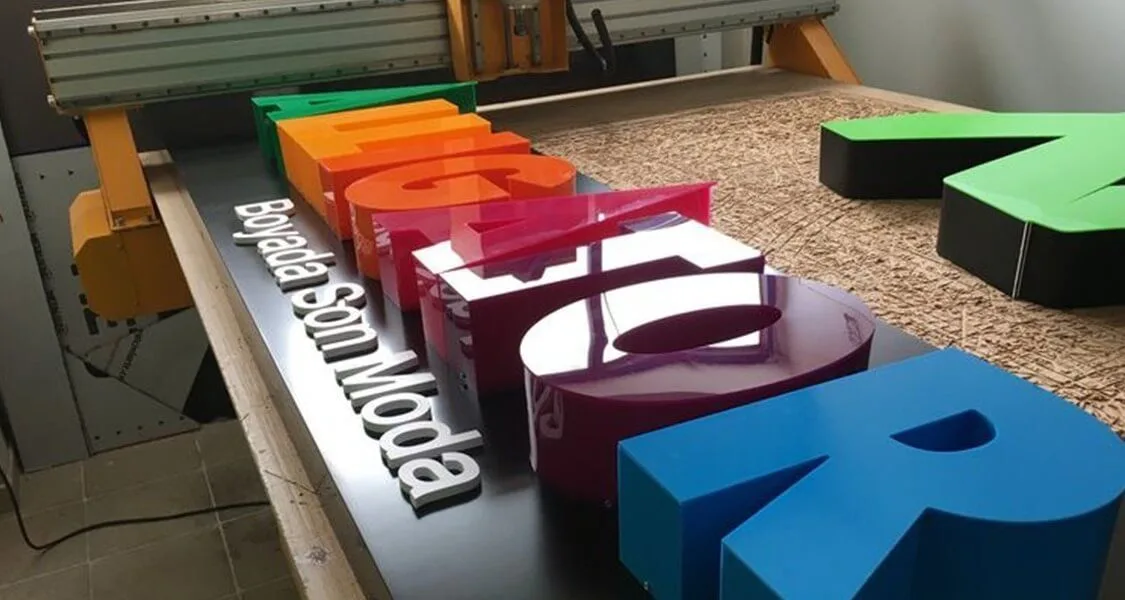
CNC-cut acrylic sign parts on the router bed at the Bayan Signage factory
CNC-cut acrylic parts on the router bed
Stainless steel sign components on the fabrication bench in Ajman
Stainless steel work on the fabrication bench
Expert advice

Advice from our work zone team

Temporary signing is a logistics job as much as a fabrication job. These points decide whether the first night of a closure goes smoothly.

Order from the plan, sign by sign

Every sign on site should match a line on the approved traffic management plan, including the supplementary plates beneath it. Crews who order from memory arrive with a 750 mm sign where the plan shows 900 mm, or without the 200 m distance plate, and the closure either starts late or starts wrong. Send us the plan itself, not a summary, and we will build the kit schedule from it.

Buy aluminium for anything beyond a short closure

Lightweight plastic plates are fine for short closures and quick emergency response. For longer works, rigid plastic warps and cracks in July heat and light plates catch every gust. A 2 mm aluminium sign on a proper frame costs more on day one, but over ten or twenty deployments it is usually the cheaper sign per use, and it stays upright.

Ballast with sandbags, never rocks

A sign frame on an exposed road shoulder needs ballast, typically two or more 15 to 25 kg sandbags over the feet. Rocks, kerbstones and concrete blocks hold the sign just as well but become projectiles if a vehicle hits it. We design frame feet to take sandbags flat, so crews are not tempted to improvise with whatever is lying on site.

Clean faces at every shift change

A film of dust on a fluorescent face sharply reduces its night performance within days in sandy areas. A quick wipe with water at each shift change keeps the layout working. Faces that are scratched, delaminating or dull at night should come off the job, because one faded sign undermines the credibility of the whole work zone.

Plan the removal as carefully as the set-up

A lane closed sign left standing after the lane reopens teaches drivers to ignore work zone signs. Cover or remove each sign as its phase ends, and keep spare covers in the kit. Labelled kits make this easier, because the crew can tick every reference back onto the vehicle before leaving.

Pricing

Road work sign price in Dubai: what affects the cost

Kits are priced from the traffic management plan, not from a list. Send us the plan or the sign schedule, the number of phases and your first deployment date, and we will return an itemised quotation, usually within 24 hours, separating signs, frames, plates and delivery.

Number of signs per phase

A simple lane closure needs a handful of signs; a multi-phase diversion can need dozens plus spares. The traffic plan sets the count, and repeated signs are cheaper each.

Sheeting grade and colour

High intensity prismatic is common. Fluorescent and microprismatic grades cost more but are often specified for faster roads and longer closures.

Plate and frame type

Aluminium on steel frames costs more than plastic plates but survives many redeployments, which usually makes it cheaper per use.

Sign sizes

Larger signs for faster roads use more material, heavier frames and more ballast, and they take more space to transport and store.

Custom diversion boards

Boards with place names need bilingual layout and approval, which adds design time compared with standard warning symbols.

Lead time

Closures are often scheduled at short notice. Rush production, out-of-hours delivery and part deliveries for the first phase can all affect the cost.

Approvals

Road work signs, permits and traffic management plans

Works that affect public roads usually need a permit from the road authority, such as RTA in Dubai, and the permit normally includes an approved traffic management plan that fixes the signs, sizes, spacings and colours for each phase. Sharjah, Ajman and Abu Dhabi have their own authorities and processes, and master developers and free zones often set rules for their internal roads.

Temporary road signs are not normally put up independently of that plan. Our job is to supply signs that match the approved layout exactly, label them to its references and turn revisions around quickly. Work zone colours and specifications vary by emirate and road type, so we confirm the current requirement with your traffic engineer before production.

Why Bayan Signage

Why contractors choose Bayan Signage for road work signs

Faces and frames under one roof

Plates, sheeting, frames and powder coat are all produced in our Ajman factory, so a kit is never held up waiting for a frame supplier. Visits during production are welcome.

Built from your traffic plan

Our draftsmen check every sign against the approved plan and flag missing plates or wrong sizes before production, not on the night of the closure.

Labelled kits by phase

Each sign and frame is labelled with its plan reference and packed by phase, which speeds up night deployment and the stock check afterwards.

Quick, matching remakes

Artwork is kept on file, so damaged signs and revised diversion plates are remade to match the rest of the kit in size, colour and sheeting.

Itemised quotes in 24 hours

Signs, frames, plates and delivery are priced separately, usually within 24 hours, so you can compare suppliers like for like.

Delivery across the UAE

We supply work zones in all seven emirates from Ajman and serve more than 500 clients across the UAE, many of them returning contractors.

FAQ

Temporary Roadwork Signs questions we are asked most

How much do road work signs cost in Dubai?

It depends on the number of signs in the traffic plan, the sheeting grade, the sign sizes and whether you need frames and supplementary plates. A short lane closure kit costs a fraction of a multi-phase diversion with custom boards. Send us the plan and we will return an itemised quote, usually within 24 hours.

Do I need a permit to put up road work signs in Dubai?

Works affecting public roads in Dubai usually need an RTA permit, and the permit typically includes an approved traffic management plan that sets the signs. You do not normally erect temporary road signs independently of that plan. We supply signs to the approved layout and confirm the current requirement for your site.

What colour are temporary road work signs?

Temporary work zone signs often use a distinct scheme, frequently fluorescent orange or yellow backgrounds, so drivers can tell them apart from permanent signs. The exact colours come from the authority's work zone guidance and can differ between emirates and road types, so we confirm them before production starts.

Are plastic signs acceptable for road works?

Lightweight plastic signs can be used for short works and emergency response because they are light and fast to carry. For longer closures, faster roads or windy locations, rigid aluminium signs on frames are usually more stable and durable. The traffic plan and the authority's guidance decide what is accepted on each road.

How quickly can you supply a road work sign kit?

We give you a realistic production schedule with the quote once the kit schedule is confirmed, and custom diversion boards need extra time for wording and approval. Sending the traffic plan early lets us check sizes, plates and quantities well before your first phase.

Can we buy road work signs to keep and reuse?

Yes. Many contractors and traffic management subcontractors keep their own stock. Aluminium signs on powder-coated frames with good sheeting last through many deployments, and asset labels on each sign and frame make stock control easier. Store them flat, dry and out of direct sun between jobs.

How heavy should sandbags be for sign frames?

Typical sandbags weigh around 15 to 25 kg each, and larger signs or exposed locations need more of them. They should sit flat over the frame feet. Avoid rocks, concrete blocks and kerbstones as ballast, because they can become serious hazards if a vehicle strikes the sign.

Do you make long-term diversion signs on posts?

Yes. For diversions lasting months, post-mounted temporary signs are more stable than frames and survive better. We make them with the same reflective sheeting as our permanent signs, install them on posts or heavy bases, and remove them when the permanent layout opens.

Free quote

Get a quote for temporary roadwork signs

Send your logo, the fascia size and a site photo. Our estimating team replies with options and an itemised price, usually within 24 hours.

  • Call or WhatsApp +971 56 637 2656
  • Workshop: Alam Square, Industrial Area 2, Ajman
  • Sunday to Thursday, 08:00 to 18:00