Sign structures · Ajman factory

Overhead Gantry Signs & Cantilever Signs in Dubai and the UAE

Bayan Signage fabricates overhead gantry signs and cantilever signs for industrial estates, ports, logistics parks, community entrances and mall ring roads. Our draftsmen prepare the shop drawings, our frame shop welds the galvanised steelwork, and our own crews lift it into place, with a 5-year warranty on structure and powder coat.

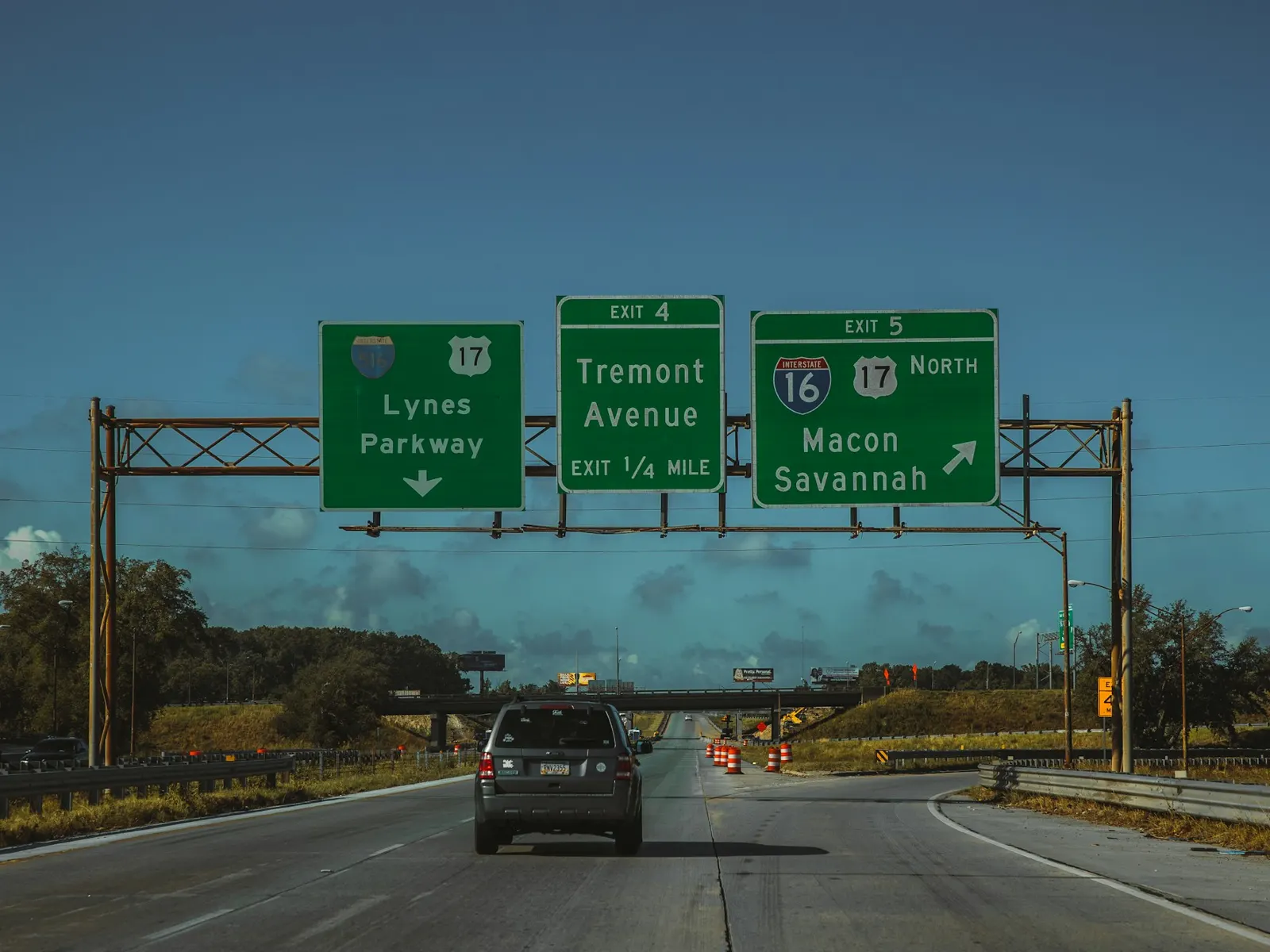
Overhead gantry signs with green highway direction panels spanning a multi-lane motorway
Illustrative photo · Unsplash
2016Factory established in Ajman
500+Clients across the UAE
In-houseDesign, fabrication and installation
24 hTypical quote turnaround
Prepared by Bayan Signage production & estimating teamFactory: Alam Square, Industrial Area 2, AjmanUpdated
Overhead Gantry & Cantilever Signs in the UAE

Gantry signs: when a sign becomes a structure

A gantry sign carries direction panels above the traffic lanes on a steel truss supported at both ends, while a cantilever sign reaches over one or two lanes from a single column. Both put the message where drivers can read it over the vehicles in front. We build them for private road networks that need lane-by-lane direction: port and free-zone gates, industrial estate spines, airport service roads, master community entrances and large retail ring roads.

Once a sign spans a road, the panel is the easy part. The truss has to resist wind on a large flat face, the foundation has to resist overturning in soil that may be saline or reclaimed, the connections have to allow for steel and aluminium expanding in 50 °C sun, and the clearance has to survive future resurfacing. We detail the panels and steelwork together, fabricate the steel in our own frame shop and trial-fit the panels in the factory before anything goes to site.

Bayan Signage is the production arm of Bayan Advertising, with 15 years in the UAE market, and our factory in Industrial Area 2, Ajman has fabricated galvanised steel frames for pylons, totems and large sign structures since 2016. One project manager takes a gantry from survey through drawings, approvals, fabrication and the night lift.

Trusted by 500+ UAE businesses, including

Al-Futtaim logoAl Ghurair logoMultiply Group logoAriston Group logoCARS24 logoDouble A logo
Our process

How we fabricate gantry signs in our Ajman factory

  1. Survey and site data

    We measure lane widths, verges and medians, record the tallest regular vehicle, and confirm the foundation and structural requirements for each column position with your project team or main contractor. The survey is free in Dubai, Sharjah and Ajman.

  2. Message, panel and structure together

    Panel size is fixed with the structure, not after it. Our designers keep each lane to one or two destinations, and our draftsmen produce shop drawings for the structural review and the approvals.

  3. Steel fabrication

    Truss chords, diagonals, columns and base plates are cut and welded in our frame shop from galvanised sections, with every weld treated and connection holes set out from the approved drawings.

  4. Panels and trial assembly

    Aluminium planks are faced with reflective sheeting and lettered, then bolted to the truss on the factory floor, so clashes and misaligned holes are found in Ajman rather than on a crane at night.

  5. Anchor bolt template and base check

    We make a steel anchor bolt template in our factory so the bolts set into each foundation match our base plates exactly, then check levels and bolt positions on site before any steel goes up.

  6. Night lift and handover

    Columns are erected and plumbed, the pre-assembled truss is lifted during an agreed road closure, bolts are tightened to the specified values, and the as-built clearance is measured and recorded before the road reopens.

Specification

Gantry sign specification

Every overhead structure is designed for its own span, panel area and site, so these are starting points rather than fixed values. The structural calculations and the approved drawings always govern.

ComponentOur standardUpgrade optionsWhy it matters
PanelsExtruded aluminium planks, boltedDeeper planks for wide multi-destination panelsPlanks join into flat panels several metres wide and can be replaced one by one later.
SheetingHigh intensity prismaticFull-cube microprismaticOverhead panels are read at an angle and at distance, where higher grades return far more light.
Truss or armGalvanised steel lattice or box sectionPowder coat over galvanising for colourSized for wind on the panels and self-weight, with a small camber so the span never appears to sag.
ConnectionsSlotted panel clamps, galvanised boltsStainless fixings on coastal sitesSlots allow alignment on site and thermal movement between hot days and cooler nights.
ColumnsGalvanised tubular or box columns on base platesCrash barrier protection at the roadsideA column close to traffic needs a barrier so a vehicle strike does not become a structural failure.
FoundationsReinforced concrete pads with cast-in anchor boltsPiled foundations for poor or reclaimed groundCoastal and reclaimed soils often change the design, which is why soil data comes first.
Our work

Inside our Ajman factory

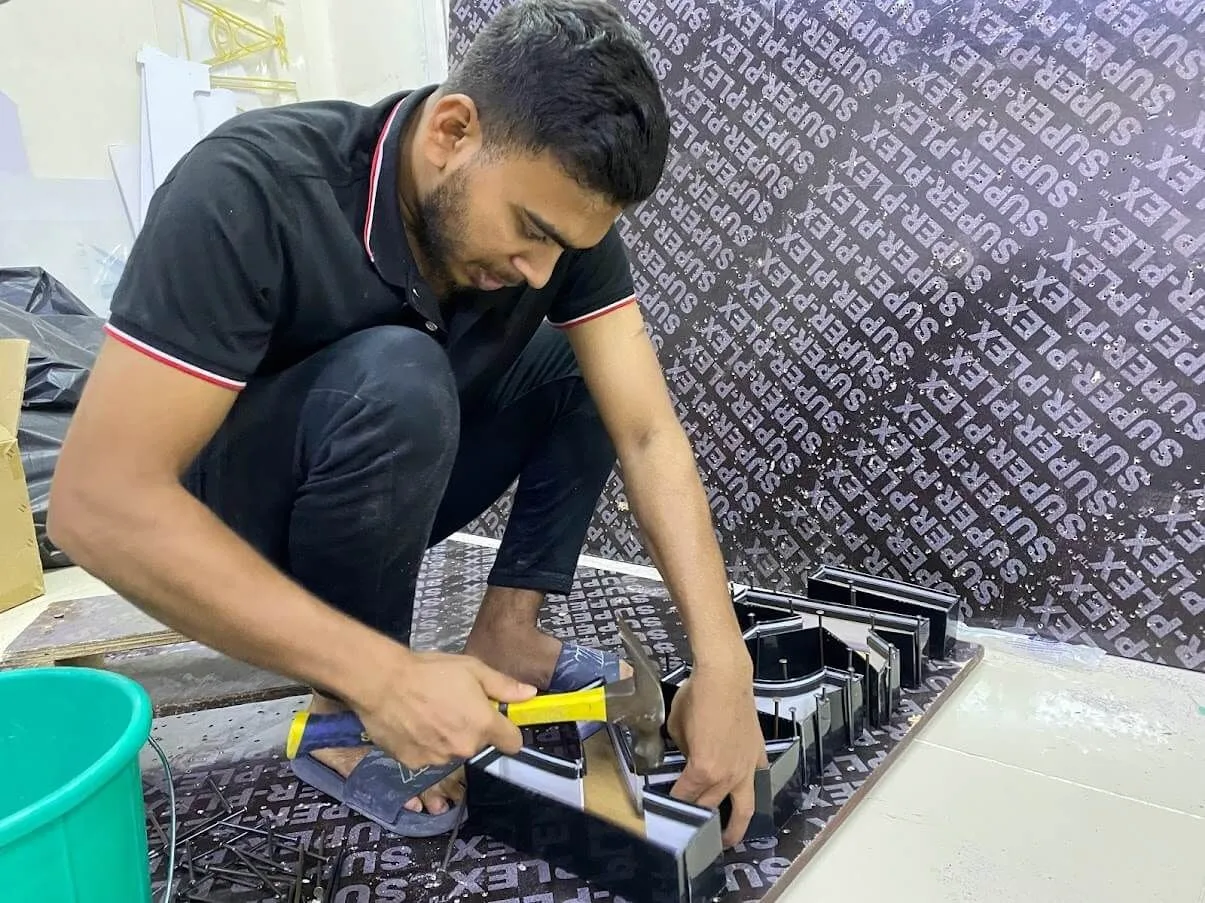
Bayan Signage technician assembling a sign in the Ajman workshop
Assembly in our Ajman workshop
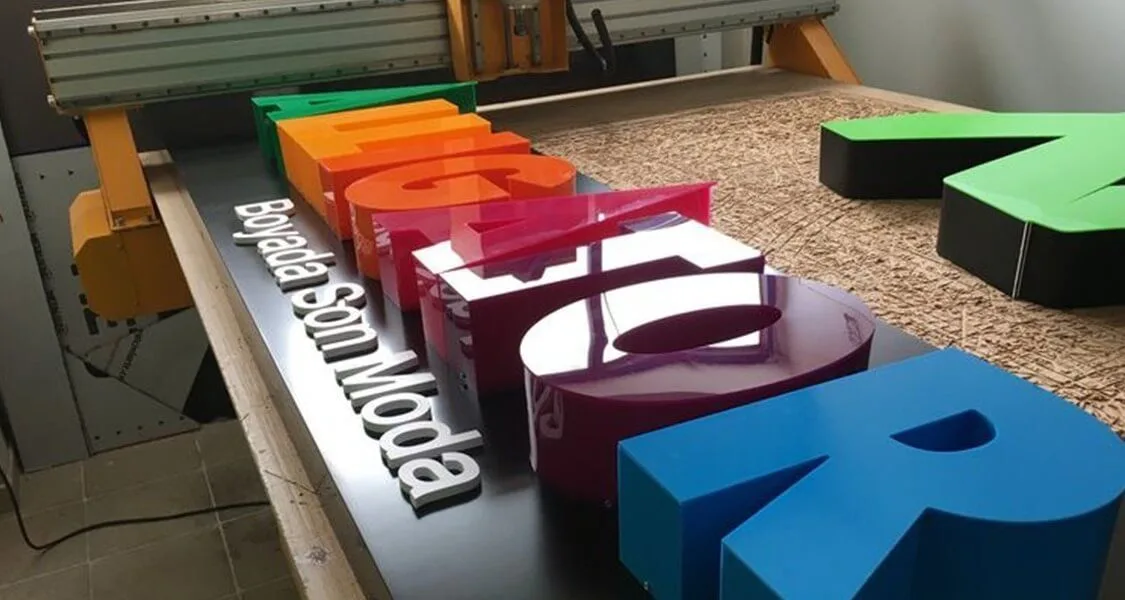
CNC-cut acrylic sign parts on the router bed at the Bayan Signage factory
CNC-cut acrylic parts on the router bed
Stainless steel sign components on the fabrication bench in Ajman
Stainless steel work on the fabrication bench
Expert advice

Advice from our structures team

Gantry projects are won or lost before the steel is ordered. These are the decisions we ask clients to settle first.

Fix the clearance before anything else

Vertical clearance under the lowest point drives the column height, the lift and sometimes the approvals. On roads it is commonly around 5.5 m or more; port and industrial sites with cranes, reach stackers or oversized loads may need much more. Ask what the tallest regular vehicle is, add a margin for one or two future resurfacing layers, and only then start drawing.

Every extra destination is extra steel

Panel area drives wind load, and wind load sizes the truss, the columns and the foundations. Adding a third destination to a lane panel can push the whole structure up a section size. Keep overhead panels to one or two destinations per lane and move secondary names to roadside signs, which are far cheaper to enlarge.

Settle the ground question at the survey

On reclaimed land, near the coast or where the water table is high, the ground decides how large each foundation must be, and a long span or a cantilever can change the answer. We confirm the foundation and structural requirements with your project team or main contractor at the survey stage, so the base plates and anchor bolt templates we fabricate match what is built on site.

Book the lift window early

Lifting a truss usually needs a crane, an agreed road closure and a traffic management arrangement, typically at night or over a weekend. On live estates and ports those windows are scarce. We fix the lift date at the start of the job and programme backwards to fabrication and site readiness, so the structure is ready when the window opens.

Choose a cantilever only when you must

A cantilever looks simpler because it has one column, but that single foundation resists the whole overturning load and is usually much larger than either gantry foundation. Where both verges have room, a full-span gantry is often more economical above two lanes, and it gives every lane its own panel.

Pricing

Gantry sign price in the UAE: what affects the cost

Overhead structures are priced from the survey, the message and the structure, never from a list. Send us the road layout, lane widths, the destinations for each lane and any known site constraints, and we will return an itemised quote, usually within 24 hours, separating design, steel, panels, approvals and installation.

Span and structure type

Longer spans need deeper trusses and heavier steel. A cantilever saves one foundation but needs a larger one to resist overturning.

Panel area

Panel area sets the wind load, which sizes the truss, the columns and the foundations. A modestly larger panel can mean a noticeably heavier structure.

Site conditions

Ground conditions, buried services and tight verges affect column positions and base plate sizes, which we confirm with your project team or main contractor at the survey.

Engineering and approvals

Shop drawings, the structural review and developer or authority approvals are part of the scope and take time before fabrication can start.

Finish

Galvanised steel is the standard. A powder-coat colour over the galvanising, to match a brand or community palette, adds cost and finishing time.

Lift and road closure

Cranes, traffic management and night closures are planned and approved in advance, and their cost depends heavily on the site and the window available.

Approvals

Gantry sign approvals: authorities, developers and engineers

Overhead signs on public roads belong to the road authority's network, such as RTA in Dubai, and are normally designed and installed through approved contractors to its specification. On private estates, ports, free zones and master communities, the developer or free-zone authority, for example JAFZA or a community master developer, usually approves the structure, often with the municipality involved where a structural permit applies.

Our draftsmen prepare the shop drawings, general arrangement and panel layouts for the submission, and foundation and structural requirements are confirmed with your project team or main contractor at the survey stage. Requirements vary with location and with whether the road connects to a public one, so we confirm the approvals for your exact site before the design is finalised.

Why Bayan Signage

Why businesses choose Bayan Signage for gantry signs

Steel and panels made in-house

Truss, columns, base plates and reflective panels are all fabricated at our Ajman factory, so structure and sign follow the same drawings. Visits during fabrication are welcome.

Trial assembly before dispatch

Panels are bolted to the steel on our factory floor, so fit problems are solved in Ajman rather than on a crane during a road closure.

Drawings and approvals

Our technical draftsmen produce shop drawings and submission packages for developers, free zones and municipalities, with one project manager following them through.

5-year outdoor warranty

Overhead structures and panels are covered for 5 years on structure and powder coat, with the warranty document issued at handover.

Itemised quotes

Design, steel, panels, foundations and installation are priced as separate lines, usually within 24 hours, so engineers and clients can compare offers fairly.

Trusted across the UAE

More than 500 clients across the UAE, including national retail groups and international brands, with most of our work coming from repeat clients and referrals.

FAQ

Overhead Gantry & Cantilever Signs questions we are asked most

How much does a gantry sign cost in the UAE?

It depends on the span, the panel area, the soil and foundations, the finish and the lift arrangements. A short cantilever over one lane on good ground costs a fraction of a full-span gantry over a four-lane port gate. Send us the road layout and the message for each lane, and we will send an itemised quote, usually within 24 hours.

What is the difference between a gantry sign and a cantilever sign?

A gantry sign spans the whole road on two supports, one each side, and can carry a panel over every lane. A cantilever sign has one support at the roadside with an arm reaching over one or two lanes. Gantries suit wide multi-lane roads; cantilevers suit narrower roads or sites with space on only one side.

Does a gantry sign need structural design?

Yes, always. An overhead sign is a structure that must resist wind, its own weight and, on roads, the risk of vehicle impact. The structural and foundation requirements are confirmed with your project team or main contractor at the survey stage, and our shop drawings reflect them, together with the relevant developer or authority approvals, before fabrication starts.

What clearance does an overhead sign need?

On roads, clearance is commonly around 5.5 m or more, but the exact figure comes from the authority or project specification and can be higher on routes used by oversized loads. On private sites we start from the tallest regular vehicle and add a margin, including an allowance for future resurfacing.

Can you build gantry signs for public roads?

Overhead signs on public roads are part of the road authority's network and are normally delivered through approved contractors to its specification. We fabricate gantry and cantilever structures for private estates, ports, free zones, communities and campuses, and we confirm the requirement for your site before design or pricing starts.

How long does a gantry sign project take?

Design and approvals often take longer than fabrication. Once drawings are approved, fabrication and trial assembly in our factory run while the site is prepared, and the lift is scheduled around an approved road closure. We give you a realistic schedule with the quote and update it after the survey.

Should overhead signs be illuminated?

Most modern overhead signs rely on microprismatic sheeting rather than lighting, because it reads well in headlights and avoids maintaining lamps at height. Lighting may still be specified on unlit roads with complex junctions. The specification for the road or site decides, and we can supply either approach.

Can the panels on a gantry sign be changed later?

Yes. The aluminium panels are bolted to the structure, so they can be replaced when destinations change or the sheeting ages. Because the structure is designed for a given panel area, a larger replacement panel should be checked against the original calculations first. We keep the drawings for every structure we build.
Free quote

Get a quote for overhead gantry & cantilever signs

Send your logo, the fascia size and a site photo. Our estimating team replies with options and an itemised price, usually within 24 hours.

  • Call or WhatsApp +971 56 637 2656
  • Workshop: Alam Square, Industrial Area 2, Ajman
  • Sunday to Thursday, 08:00 to 18:00