Indoor wayfinding · made in Ajman

Wall Mounted Directional Signs for Dubai, Sharjah & Ajman Buildings

Bayan Signage makes wall mounted directional signs for corridors, lift lobbies and junctions in offices, clinics, hospitals, schools and hotels. We plan the messages floor by floor, CNC-cut and print every panel in our Ajman factory, and build modular versions with changeable inserts for buildings where departments move and room ranges change.

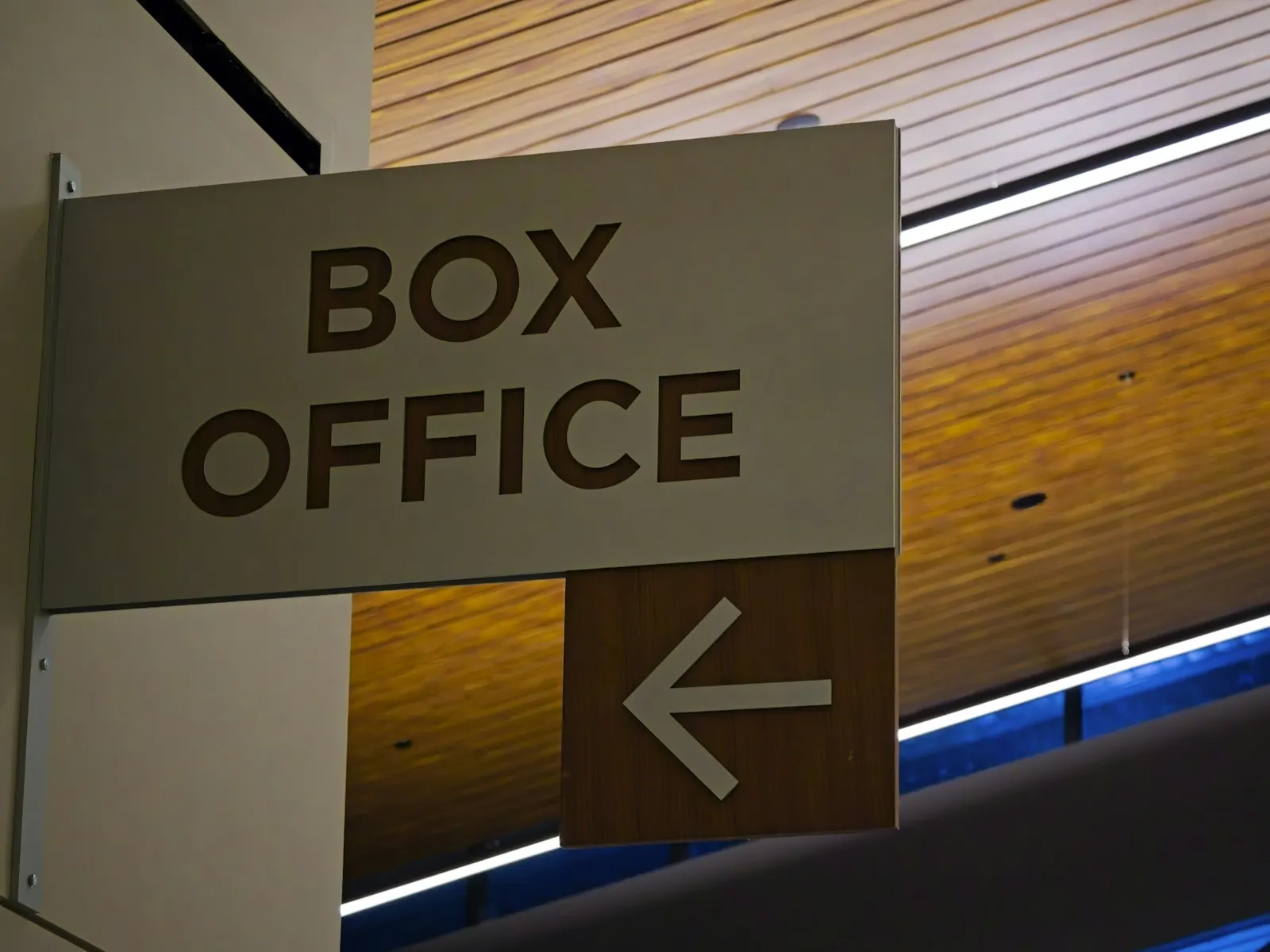
Wall-mounted directional sign with bold lettering and a left arrow beneath a wooden ceiling
Illustrative photo · Unsplash
2016Factory established in Ajman
500+Clients across the UAE
In-houseDesign, fabrication and installation
24 hTypical quote turnaround
Prepared by Bayan Signage production & estimating teamFactory: Alam Square, Industrial Area 2, AjmanUpdated
Wall-Mounted Directional Signs in the UAE

Wall mounted directional signs for every corridor

Wall mounted directional signs are the panels and projecting signs fixed to corridor walls at junctions and lift lobbies, pointing people to departments, room ranges and facilities. People look ahead and slightly down as they walk, so a panel at eye level on the wall facing them is read almost without effort. In offices, clinics, schools, hospitals and hotel back-of-house areas they do the job that hanging signs do in malls, at a fraction of the cost and with no ceiling work.

They work best in buildings with long corridors and repetitive layouts: a hospital floor where every wing looks the same, or a school block with forty identical classroom doors. The quality is in the planning and the detail. A sign matched to the wall colour looks elegant and disappears. Arrows placed inconsistently send people the wrong way. Departments move, and fixed print goes out of date. We plan messages floor by floor, design modular panels with replaceable inserts where change is likely, and produce every panel in our Ajman factory to one set of drawings.

Bayan Signage has fabricated interior and exterior signage in Ajman since 2016, as the production arm of Bayan Advertising, which has 15 years in the UAE. Our designers and draftsmen prepare message schedules for whole buildings, our CNC and print teams produce the panels, and our installers fix them floor by floor around occupied offices and live clinics. More than 500 clients across the UAE have trusted us, and most new work comes from returning clients and referrals.

Trusted by 500+ UAE businesses, including

Al-Futtaim logoAl Ghurair logoMultiply Group logoAriston Group logoCARS24 logoDouble A logo
Our process

How we make wall mounted directional signs in our Ajman factory

  1. Floor walk and junction map

    We walk each floor from the lifts and stairs, mark every junction where a choice is made and photograph the wall at each point. The visit is free in Dubai, Sharjah and Ajman.

  2. Message schedule

    We list every sign's destinations, arrows and room ranges in Arabic and English, so the client can check the information before any design work begins.

  3. Design and sample panel

    Designers set fonts, contrast, arrow positions and colour coding, then we make a full-size sample panel to approve on the wall under real corridor lighting.

  4. CNC cutting and printing

    Panels are CNC-routed to ±0.1 mm from acrylic, aluminium or ACP, printed on our UV printers or applied in cast vinyl, and inserts cut to the system size.

  5. Schedule check and packing

    Every panel is checked against the message schedule for wording, arrow direction and position number, then packed by floor in installation order.

  6. Floor-by-floor installation

    Our crew fixes panels with the right anchors for gypsum, block or concrete, working around occupied areas, and walks each route again after installation to test it.

Specification

Wall mounted directional signs specification

This is our standard for indoor corridor directionals. We adjust it to the building's design, accessibility guidance and cleaning regime.

ComponentOur standardUpgrade optionsWhy it matters
Panel3 mm aluminium or ACP, or 8 mm acrylicModular rail system with slide-in insertsRigid panels stay flat on uneven walls; modular systems make changes cheap.
FinishMatt or satin, high tonal contrastColour-coded zones, metallic accentsMatt faces avoid glare from corridor lighting and glazing.
GraphicsUV print or 3M cast vinylCNC-cut raised acrylic letters and arrowsClean, high-contrast text reads faster and lasts longer than paper inserts.
ArrowsAt least the cap height, on the side they pointCustom arrow set to match brandConsistent arrows are the quickest part of any sign to read.
Projecting signsDouble-sided flag on a bracketLit or edge-lit flagsFlags are visible along a corridor, while flat panels are seen only at the junction.
FixingConcealed fixings or tape to suit the wallTamper-resistant fixings for public areasThe right anchor stops panels working loose in gypsum partitions.
Our work

Inside our Ajman factory

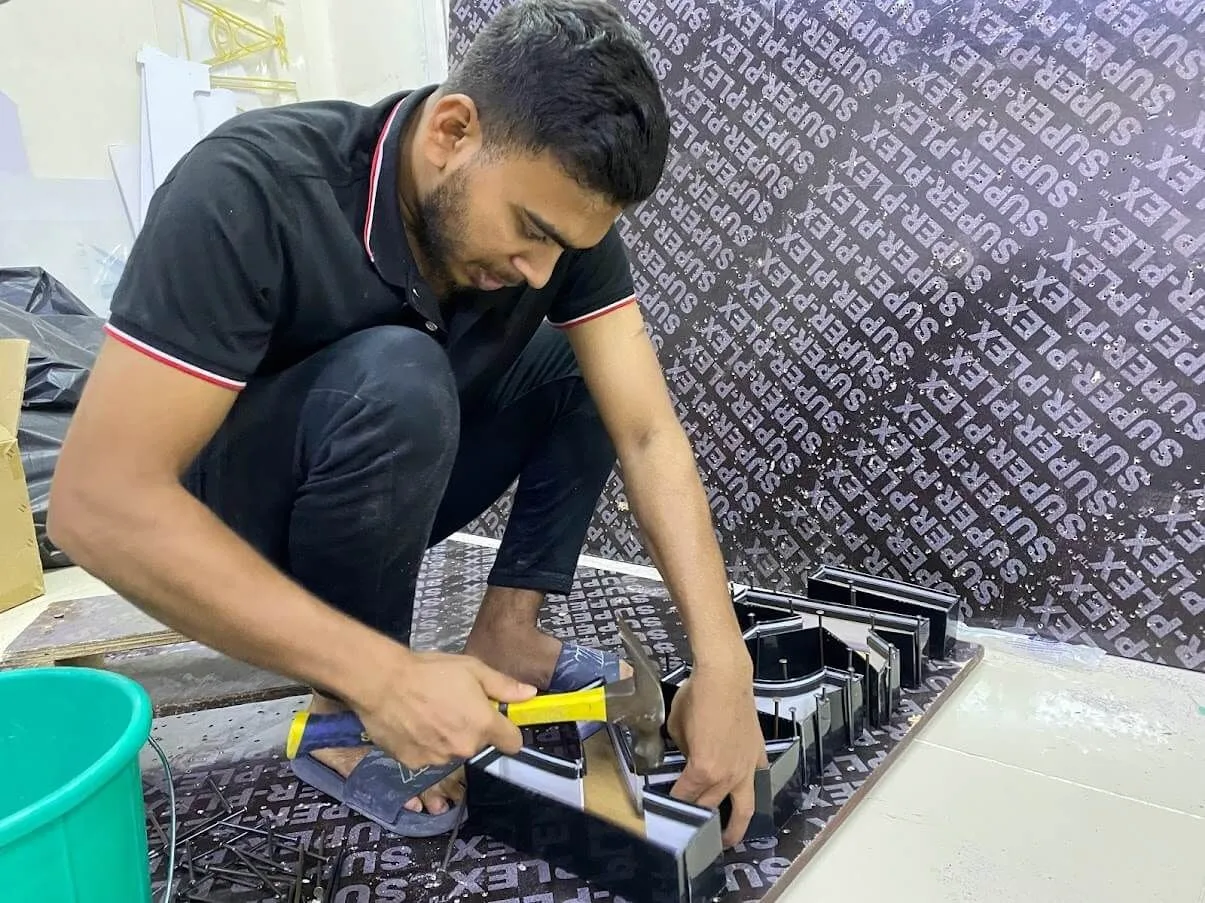
Bayan Signage technician assembling a sign in the Ajman workshop
Assembly in our Ajman workshop
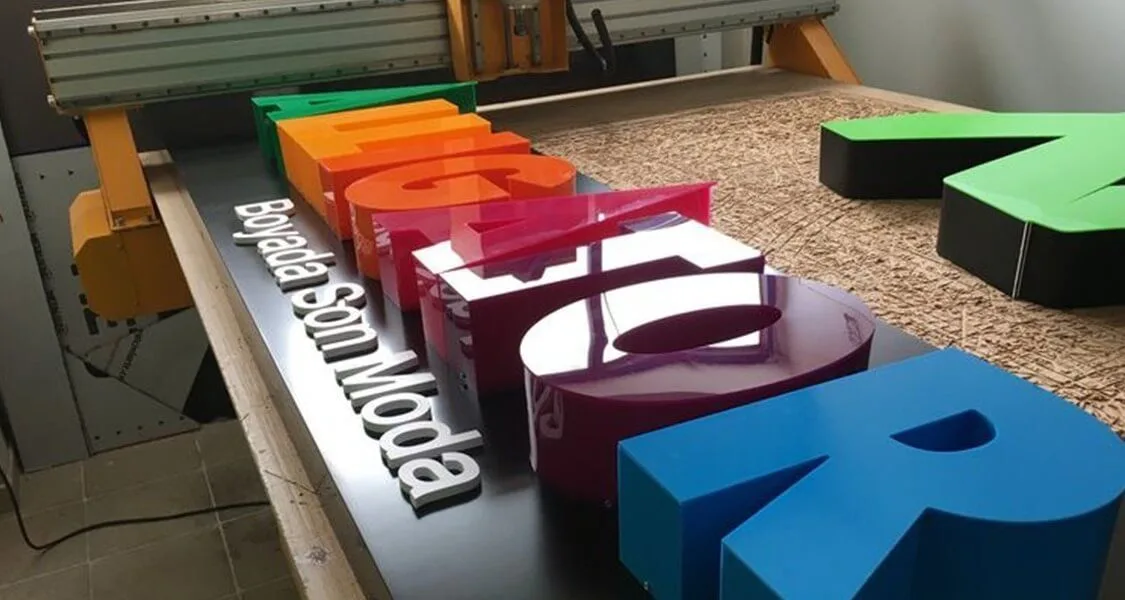
CNC-cut acrylic sign parts on the router bed at the Bayan Signage factory
CNC-cut acrylic parts on the router bed
Stainless steel sign components on the fabrication bench in Ajman
Stainless steel work on the fabrication bench
Expert advice

Advice from our wayfinding designers

Indoor directionals are inexpensive to make and easy to get wrong. These are the rules we apply on every building.

Contrast beats size

Light text on a dark background, or dark on light, with a strong difference in tone, is easier to read than large text in a subtle colour. Matching the sign to a feature wall looks elegant in the render and disappears in the corridor. Accessibility guidance such as the Dubai Universal Design Code expects good contrast and non-glare finishes, and we design to it even where nobody checks.

Put the sign where the eye already is

Mount the panel on the wall people face as they reach a junction, centred around 1,500 to 1,700 mm, which suits both standing and seated readers reasonably well. A sign on a side wall is only seen once someone has already stopped and turned. On long corridors, add a projecting sign with its lowest edge at 2,100 mm or more so it is visible from a distance.

Keep arrows consistent

Make arrows at least as tall as the text cap height and always place them on the side they point: left arrows on the left, right arrows on the right, straight-ahead arrows at the top of the list. Pick one arrow design and use it in every sign. Most wrong turns we see in buildings come from inconsistent arrow placement rather than unclear text.

Plan for change in hospitals and offices

Clinics add specialities, offices reorganise departments and schools renumber classrooms. Where change is likely, use a modular system with slide-in inserts, so one line can be reprinted instead of the whole panel. A fixed, beautifully printed sign that goes out of date in a year costs more over its life than a modular one that stays right.

Sign prayer rooms like washrooms

Most UAE offices, clinics and schools include prayer rooms and ablution areas, often in a side corridor. They belong on the directionals with clear pictograms, with male and female rooms signed separately, and given the same prominence as washrooms. Leaving them off the main signs is one of the most common gaps we find in older buildings.

Pricing

Wall mounted directional signs price in Dubai: what affects the cost

We quote from your floor plans and the message schedule. Send the plans, the departments or room ranges on each floor and any brand guidelines, and we usually return an itemised quote within 24 hours.

Number of signs and floors

Repeating a few sign types across many floors keeps the cost of each sign low and simplifies future replacements.

System type

Fixed printed panels are the most economical. Modular rails with slide-in inserts cost more at first and less over time.

Material and finish

Printed aluminium or ACP is the baseline. Thick acrylic, metallic finishes and layered panels add material and production time.

Projecting and lit signs

Flag signs need brackets and stronger fixings, and lit versions need LEDs, drivers and a power point.

Raised acrylic text

CNC-cut acrylic letters and arrows bonded onto a printed panel add cutting, alignment and bonding steps, but give lobbies and executive floors a premium finish.

Installation conditions

Occupied offices and live clinics often need out-of-hours work and phased installation, which adds visits.

Approvals

Standards for indoor directional signs

Indoor directionals do not usually need a municipality permit, but they are reviewed by landlords and fit-out consultants, and towers often have their own signage standards for common areas. Where a building follows the Dubai Universal Design Code, directional signs are expected to have good contrast, non-glare finishes, consistent mounting heights and clear pictograms.

Healthcare facilities may also follow authority guidance on wayfinding, accessibility and cleanable surfaces, and signs must never compete with or obscure emergency exit signage required by Civil Defence. We design to the standards your project applies and confirm them with your consultant or facility manager at the start of the job.

Why Bayan Signage

Why businesses choose Bayan Signage for wall mounted directional signs

Message schedules first

We list every destination on every sign before design, so the client checks the information once and nothing is missed on any floor.

Made in our own factory

CNC routing, UV printing and panel assembly happen in Ajman, so replacement inserts match the originals years later.

Designed for change

Modular systems with slide-in inserts mean a moved department costs one new strip, not a new sign.

Accessible by design

High contrast, matt finishes, consistent heights and clear pictograms are part of our standard, following the Dubai Universal Design Code where it applies.

Installed around your operations

Our crews install floor by floor around occupied offices, live clinics and school hours, and test every route afterwards.

Itemised by floor

Quotes list every sign by floor and location, usually within 24 hours, so you can phase the work or adjust the scope easily.

FAQ

Wall-Mounted Directional Signs questions we are asked most

How much do wall mounted directional signs cost in Dubai?

The cost depends on the number of signs, the system type, material, any projecting or lit signs and the installation conditions. Printed aluminium panels across a few floors cost far less than a modular insert system with raised acrylic room signs across a hospital. Send your floor plans and destinations, and we will send an itemised quote, usually within 24 hours.

How long does it take to make and install directional signs?

It depends on the number of signs, the system and site access, so we give you a realistic schedule with the quote and confirm it once the sample panel is approved. On occupied floors we phase installation around your working hours. The message schedule often takes longest, because departments and room ranges must be confirmed by the client.

At what height should wall directional signs be mounted?

Most indoor directional panels are mounted with their centre around 1,500 to 1,700 mm above the finished floor, which suits standing and seated readers reasonably well. Projecting signs need their lowest edge at 2,100 to 2,200 mm or more, so nobody walks into them. Your building's standards or fit-out consultant may set exact heights.

Wall signs or hanging signs: which should we use?

In offices, clinics, schools and hotels with ceilings under about 3 m, wall signs are usually cheaper, easier to install and easier to read. Hanging signs suit large open spaces, high ceilings and crowded areas where walls are blocked, such as malls and hospital main streets. Many buildings use both.

Can the signs be updated when departments move?

Yes, if you choose a modular system. Slide-in inserts or replaceable strips let us reprint one line rather than the whole sign. We keep the artwork and drawings for every project, so replacement inserts match the originals in font, colour and size.

Do directional signs need to be in Arabic and English?

In most UAE buildings, yes. We usually set Arabic and English side by side or stacked per line, with arrows in consistent positions. Either layout works if it is consistent across the building. We check all Arabic text before production.

Are your directional signs suitable for hospitals?

Yes. For healthcare we use smooth, sealed surfaces that tolerate frequent cleaning, avoid paper inserts in clinical areas, and use colour-coded zones and clear pictograms for patients who may be stressed or unwell. We follow the facility's infection-control and accessibility requirements, which we confirm with the facility team.

Do you install indoor signs across the UAE?

Yes. Our crews install across all seven emirates from our factory in Ajman. The site visit is free in Dubai, Sharjah and Ajman, and for buildings further away we can start from floor plans and photos.
Free quote

Get a quote for wall-mounted directional signs

Send your logo, the fascia size and a site photo. Our estimating team replies with options and an itemised price, usually within 24 hours.

  • Call or WhatsApp +971 56 637 2656
  • Workshop: Alam Square, Industrial Area 2, Ajman
  • Sunday to Thursday, 08:00 to 18:00