Acrylic sign fabricators since 2016

Acrylic Light Box Signs in Dubai, Sharjah & the UAE

Bayan Signage cuts, prints and assembles acrylic light box signs in its Ajman factory, from simple opal faces with cast vinyl to routed panels with glowing push-through letters. We approve your colours on a lit sample, build the frame to let the acrylic move in the heat, and back every outdoor box with a 5-year warranty.

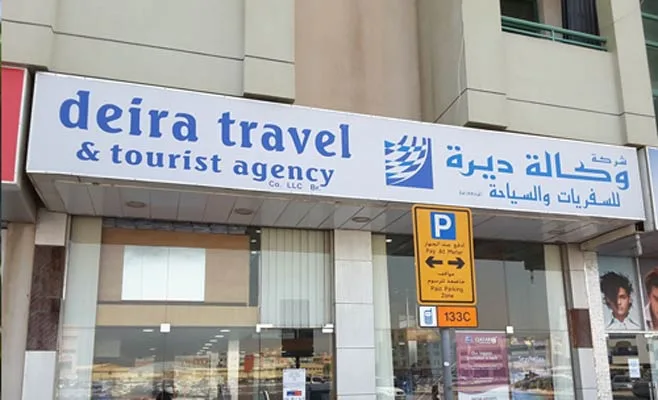
Bilingual acrylic light box sign on a travel agency fascia above the shop entrance
2016Factory established in Ajman
500+Clients across the UAE
In-houseDesign, fabrication and installation
24 hTypical quote turnaround
Prepared by Bayan Signage production & estimating teamFactory: Alam Square, Industrial Area 2, AjmanUpdated
Acrylic Lightboxes in the UAE

Acrylic light box signs: the face does the work

An acrylic light box sign is an illuminated cabinet whose face, and sometimes its sides, is made from acrylic sheet, usually 3 to 8 mm opal white, with the graphics applied as translucent vinyl, a printed backlit film or routed push-through letters. Acrylic diffuses LED light into a smooth glow, cuts cleanly on a CNC router or laser, and keeps its clarity in Gulf sun far better than most plastics. Bakeries, salons, law offices, clinics and food court units all use it, each with a very different face.

In an acrylic box, the face is where quality shows and where most of the budget choices sit. Cast sheet routes and polishes better than extruded; cast vinyl stays put where cheap calendered vinyl shrinks and leaves a dark halo round every letter. Acrylic also grows by around 0.07 mm per metre for each degree of temperature change, so a 3 m face in July can lengthen by 10 mm. We specify cast materials, cut faces on our own CNC routers and build frames with room for that movement.

Bayan Signage has made acrylic signs in Ajman since 2016 as the production arm of Bayan Advertising, which has worked in the UAE for 15 years. CNC routing, laser cutting, UV printing up to 3.2 m wide, LED assembly and testing all happen in our factory at Alam Square, Industrial Area 2, with no fabrication outsourced. More than 500 clients across the UAE have worked with us, and most new jobs come from returning clients and referrals.
Trusted by 500+ UAE businesses, including

Al-Futtaim logoAl Ghurair logoMultiply Group logoAriston Group logoCARS24 logoDouble A logo
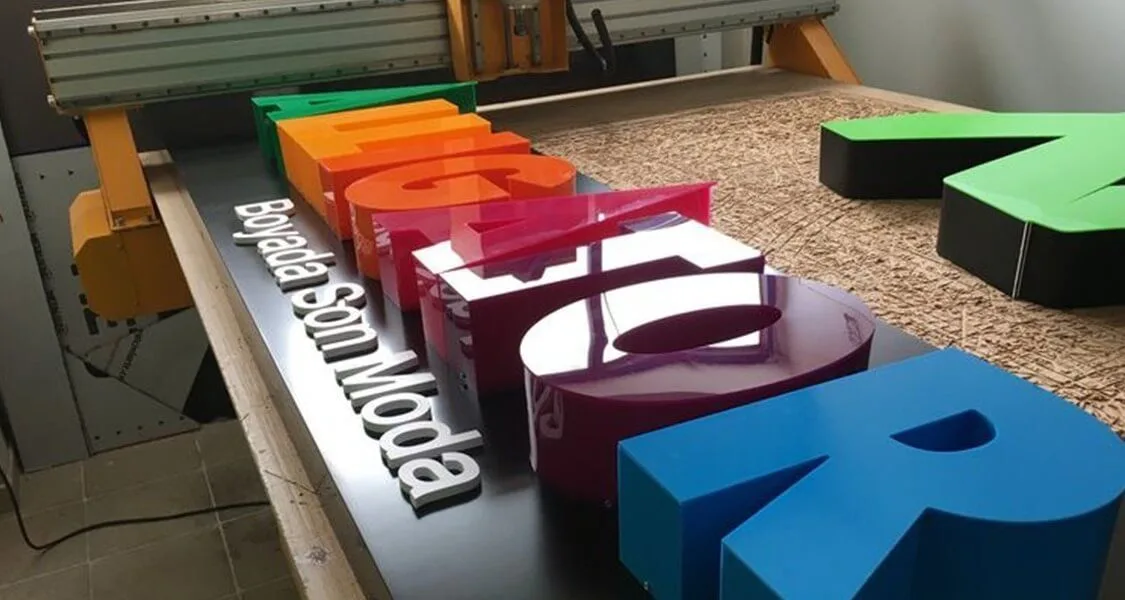
Coloured acrylic parts for an acrylic light box sign cut on the CNC router bed
Our process

How we make acrylic light box signs in our Ajman factory

  1. Brief, survey and artwork check

    We measure the fascia, note sun direction and check your artwork for stroke widths and small Arabic dots that need adjusting before cutting. The survey is free in Dubai, Sharjah and Ajman.

  2. Lit colour sample

    Brand colours are matched in translucent vinyl or acrylic and shown to you lit from behind, because a red that matches by day can turn orange when the LEDs come on.

  3. CNC routing and polishing

    Faces and push-through letters are routed on our CNC machines to ±0.1 mm. Visible edges are polished, and joints are planned between words or at a colour change.

  4. Graphics application

    Cast vinyl is cut, weeded and laid colour by colour, or backlit film is printed on our UV printers and laminated. The face is then protected with film for the journey.

  5. Frame build and light test

    The aluminium frame is built with slotted fixings and clearance for expansion. LEDs are fitted at the right spacing for the throw and the box is run at full brightness before sign-off.

  6. Installation and dusk check

    Our crew fixes the cabinet to suit the substrate, places the driver in a ventilated spot, removes the protective film last and checks the face for evenness and colour at dusk.

Specification

Acrylic light box specification

Our starting specification for a street-facing acrylic box. Indoor boxes can step down in some items, and every change is shown separately on the quote.

ComponentOur standardUpgrade optionsWhy it matters
Face sheet5 mm opal cast acrylic6 to 8 mm for large or exposed faces, coloured cast acrylicCast sheet is stiffer, routes cleaner and stays flat in heat better than thin extruded sheet.
GraphicsCast translucent vinylPrinted backlit film, day/night vinyl, reverse printCast vinyl does not shrink in UAE heat, so letters keep sharp edges for years.
Face retentionAluminium channel with 3 to 5 mm free movementHinged frame for frequent accessA face clamped tight bows or cracks at the screw holes in its first summer.
LEDsSamsung or Epistar modules, IP65, 12 V DCColoured LEDs behind saturated faces, 24 V runsBranded modules keep colour consistent across the face and from box to box.
ReturnsPainted aluminiumClear or opal acrylic, solvent-bondedAcrylic returns glow at the edges but need polished joints and extra modules.
Low-level facesAcrylic above head heightUV-grade polycarbonate below about 2.5 mAcrylic is brittle; at kicking height a ball or trolley can crack it.
Our work

Acrylic light box work by Bayan Signage

Bilingual acrylic light box fascia sign above a travel agency shopfront
Bilingual acrylic fascia lightbox
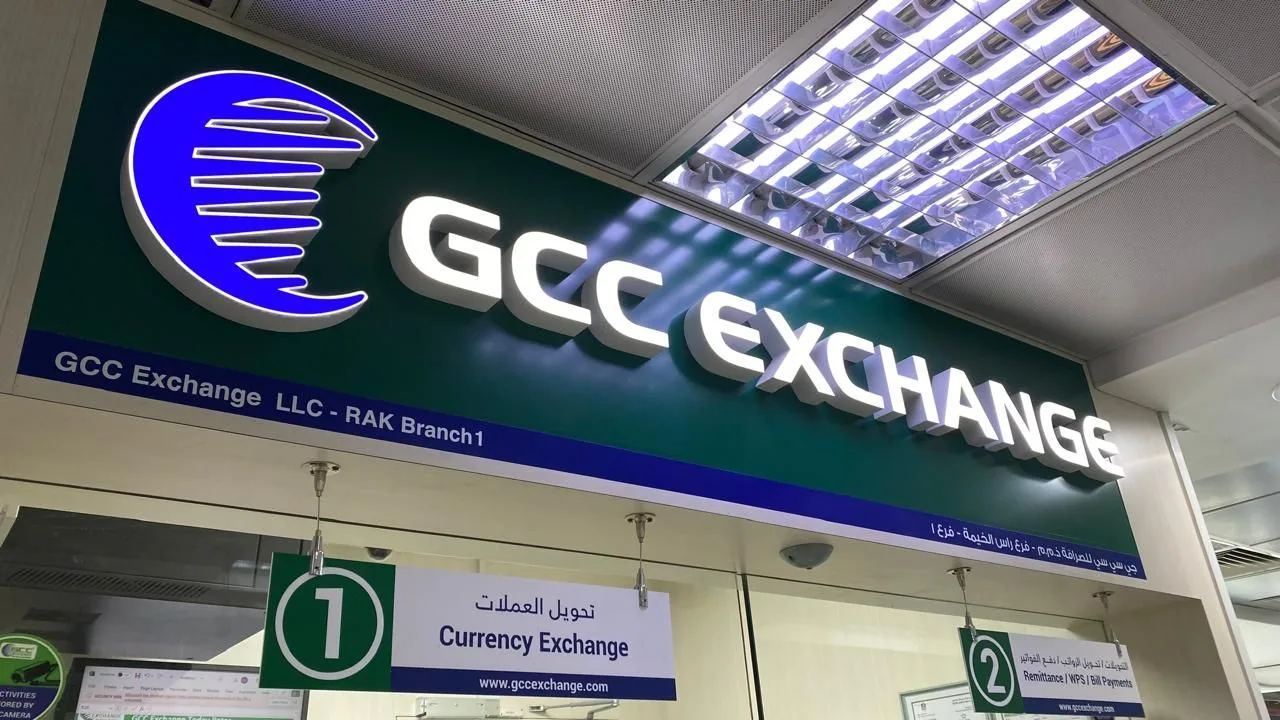
Illuminated acrylic fascia and counter number signs for a currency exchange in a mall
Illuminated fascia and counter signs in a mall
Colourful CNC-cut acrylic pieces on the router bed in the Bayan Signage workshop
Acrylic parts on our CNC router bed
Expert advice

Advice from our acrylic workshop

Acrylic is forgiving to work with and unforgiving if the details are wrong. These are the points our fabricators raise on almost every acrylic brief.

Match the thickness to the span

As a rule of thumb, 3 mm suits panels under about 600 mm, 5 mm works for most fascias up to 1.2 m tall, and larger or exposed faces go to 6 or 8 mm. Push-through letters need 8 to 20 mm so they project and catch light on their edges. Going thinner to save cost on a big face usually ends with a sheet that ripples in summer and needs replacing.

Let the face float

A 3 m face that goes from 20°C at night to 70°C in afternoon sun can grow by around 10 mm. If it is screwed hard into a frame with no slots, it bows, pops out of its channel or cracks at the fixings, sometimes after a single hot week. We leave 3 to 5 mm free each side, use slotted holes and keep large black vinyl areas off sun-facing faces, because dark colours absorb heat.

Approve colour lit, not on screen

Translucent vinyl and coloured acrylic look different with light behind them. Reds drift towards orange, dark blues can look purple, and greys often go muddy. We cut a small sample and show it to you lit, ideally in the evening. It takes a day and is the cheapest insurance there is against a sign that looks off-brand every night for ten years.

Use polycarbonate where it can be hit

In car parks, school entrances and busy pavements, low-level acrylic gets cracked by balls, trolleys and car doors. UV-grade polycarbonate costs more per sheet but survives the hit. Above about 2.5 m, acrylic is the better choice: clearer, more colourfast and less prone to yellowing. A single box can even mix the two if the lower face is exposed.

Expect print to age faster than vinyl

In direct UAE sun, printed backlit films typically last three to five years before colours fade noticeably, with reds and yellows going first. Cut cast vinyl generally outlasts print. If your logo is made of flat colours, cut vinyl on opal will look better for longer on a sunny facade. Save print for shaded positions or artwork that changes anyway.

Pricing

Acrylic light box price in Dubai: what affects the cost

We quote each acrylic box from its drawing, so you pay for the face and frame your site needs. Send your logo, the sign size and a photo of the facade for an itemised quote, usually within 24 hours.

Graphic method

Cut vinyl on opal is the most economical. Printed film adds print cost; push-through letters and coloured inlays add routing, polishing and bonding.

Sheet thickness and grade

Thicker cast acrylic costs more than thin extruded sheet, but it stays flat, cuts cleaner and lasts longer outdoors.

Face size and joints

A face beyond a single sheet needs joints, support sections and careful layout, adding both material and fabrication time.

Number of colours

Each vinyl colour is cut, weeded and laid separately, so a six-colour logo with fine detail takes far longer than two colours.

All-acrylic construction

Glowing acrylic sides need polished edges, solvent-bonded joints and more LEDs, and cost noticeably more than painted aluminium returns.

Installation and access

Height, permitted working hours, boom lift or scaffold needs and electrical work to reach the power point make up the site part of the price.

Approvals

Acrylic light box permits and landlord rules

Street-facing acrylic boxes usually need a sign permit from Dubai Municipality, Sharjah Municipality, Ajman Municipality or the relevant free-zone authority, such as DMCC, JAFZA or TECOM. The permit normally covers the trade name and the sign size, so the Arabic and English on the face must match your licence. Our draftsmen prepare and submit the drawings and confirm the rules for your address.

Malls often go further. Tenant criteria may list approved acrylic colours, maximum brightness, colour temperature and whether printed faces are allowed at all. Some require a lit sample before they sign off. We read the current criteria for your mall before drawing, so the box is designed to pass rather than revised after a rejection.

Why Bayan Signage

Why businesses choose Bayan Signage for acrylic light box signs

CNC and laser in-house

Faces, push-through letters and acrylic returns are cut on our own CNC routers and laser cutters to ±0.1 mm, so edges are clean and parts fit first time.

Lit colour approval

You approve brand colours on a lit sample before production, not on a screen proof, so the sign looks right at night as well as by day.

Cast materials as standard

Cast acrylic and cast vinyl are our default for outdoor faces, because they hold their shape and colour in UAE heat.

5-year outdoor warranty

Outdoor acrylic boxes are covered for 5 years on LEDs, powder coat and structure, documented at handover.

Faces replaced without new boxes

We keep your drawings on file, so a rebrand or damaged face can be cut to fit the existing cabinet in a single visit.

Every sign inspected

Each box is checked against the approved artwork for size, colour and light uniformity and signed off before it leaves the factory.

FAQ

Acrylic Lightboxes questions we are asked most

What thickness of acrylic is best for a light box?

For most outdoor fascia boxes, 5 mm opal cast acrylic is the standard choice. It is stiff enough for faces up to about 1.2 m tall and diffuses LEDs well. Small indoor panels can use 3 mm, while large or exposed faces go to 6 or 8 mm, and push-through letters use 8 to 20 mm depending on the design.

Is acrylic, polycarbonate or fabric better for a lightbox face?

Acrylic is better for clarity, colour and UV resistance; polycarbonate is better for impact. We use acrylic for most fascias above head height and polycarbonate where a sign can be hit, such as car parks or schools. Outdoors, polycarbonate must be a UV-protected grade or it can yellow over time. For large indoor graphics that change with campaigns, a fabric SEG lightbox is lighter and its printed face swaps faster than any rigid sheet.

Why does my acrylic sign look patchy at night?

Usually the LEDs are too far apart for the depth of the box, or the opal is too clear, so you see a bright spot over each module. Failed modules cause dark patches too. We can normally fix it by adding modules, fitting a denser opal or adding a diffuser behind the face.

Can you replace just the acrylic face on a lightbox you made for us?

Yes, if the cabinet and lighting are sound. We already hold the drawings for every lightbox we build, so we cut a new face to fit, apply fresh graphics in the workshop and fit it, often in one visit. It is a common way to rebrand or refresh a faded sign without building a new box. See our lightbox face replacement service.

How much does an acrylic light box sign cost in Dubai?

The price depends on size, sheet thickness, graphic method, number of colours, frame finish and installation access. A two-colour vinyl face on a small box is far cheaper than a routed panel with push-through letters. Send your logo, size and a photo and we will send an itemised quote, usually within 24 hours.

How do I clean an acrylic lightbox?

Use water, mild soap and a microfibre cloth. Avoid paper towels, which scratch, and never use solvents, ammonia or glass cleaners, which cause fine cracks called crazing. Outdoors, a monthly wipe keeps dust off the face. If vinyl starts lifting at an edge, have it re-laid early before dust gets under it.

Can the letters stand out from the face of the box?

Yes. Push-through letters are routed from thick acrylic and pushed through a cut metal face, projecting 5 to 15 mm and glowing on the front and edges. That gives a 3D look while keeping a cabinet behind. For a fully three-dimensional sign without a box, illuminated acrylic 3D letters are the alternative.

Do you make bilingual acrylic signs?

Yes, most of our acrylic boxes carry Arabic and English together. Routed and push-through faces need a minimum stroke and dot size to cut and glow cleanly, so we check the Arabic at full size and adjust weights where needed. The spelling is checked against your trade licence before anything is cut.

Free quote

Get a quote for acrylic lightboxes

Send your logo, the fascia size and a site photo. Our estimating team replies with options and an itemised price, usually within 24 hours.

  • Call or WhatsApp +971 56 637 2656
  • Workshop: Alam Square, Industrial Area 2, Ajman
  • Sunday to Thursday, 08:00 to 18:00