Hazardous substance signs · Ajman factory

Chemical Hazard Signs in Dubai, Sharjah & Ajman

Bayan Signage makes chemical hazard signs for warehouses, factories, pool plant rooms, laboratories and fuel tanks across the UAE. We work from your chemical register, sign each store with the hazards it actually holds and build every sign for the fumes, splashes and cleaning it will face, all in our own Ajman factory.

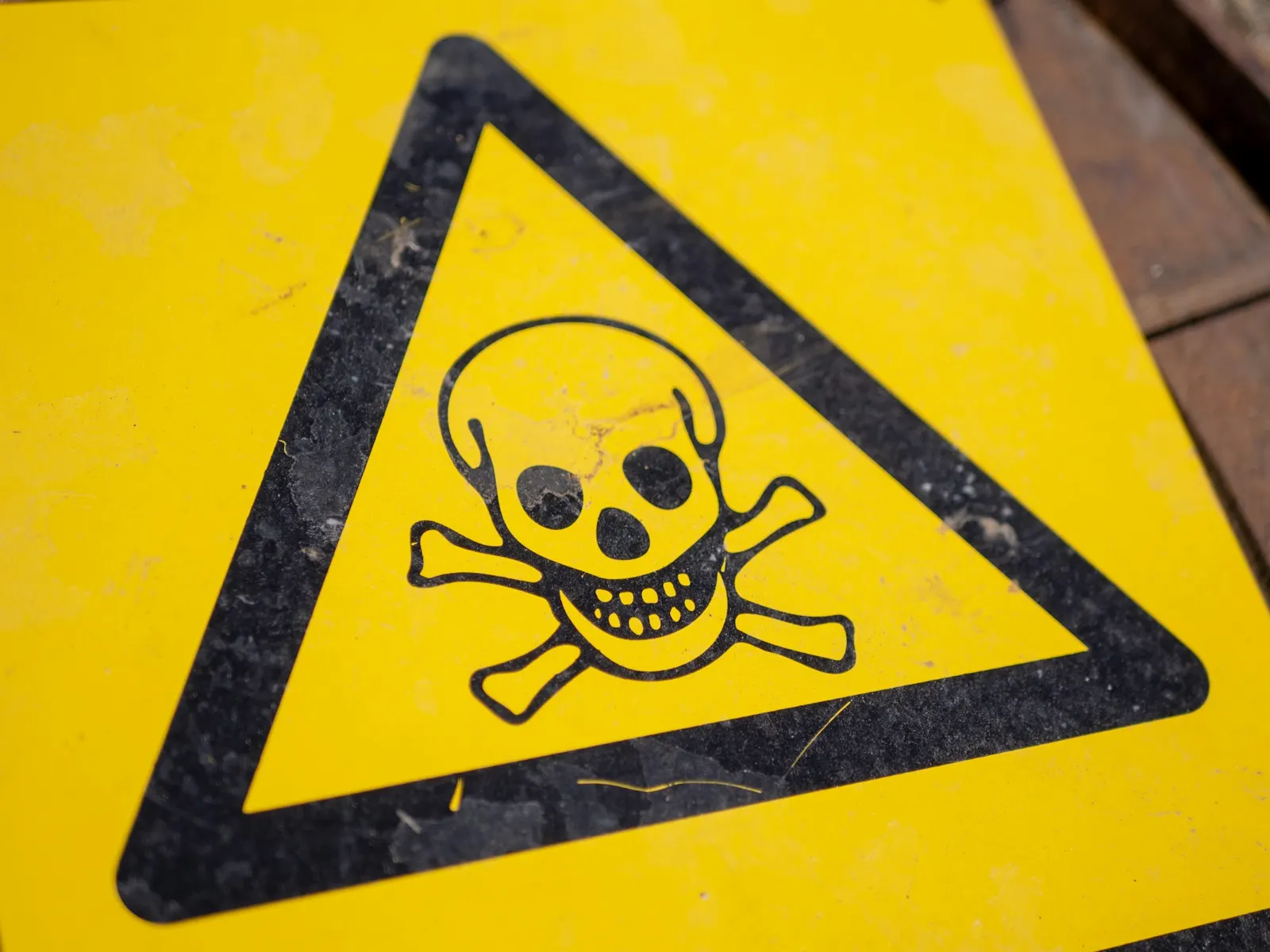
Yellow triangular chemical hazard sign with a black skull and crossbones toxic symbol
Illustrative photo · Unsplash
2016Factory established in Ajman
500+Clients across the UAE
In-houseDesign, fabrication and installation
24 hTypical quote turnaround
Prepared by Bayan Signage production & estimating teamFactory: Alam Square, Industrial Area 2, AjmanUpdated
Chemical Hazard Signs in the UAE

Chemical hazard signs that survive what is stored behind them

Chemical hazard signs mark the rooms, cabinets, tanks and compounds where hazardous substances are kept or used. They use the yellow ISO 7010 warning triangle with a black symbol for the specific hazard: a flame for flammable material, a corroding hand and surface for corrosives, a skull for toxic substances, and others for oxidisers and harmful vapours. They serve two very different readers: the cleaner or technician who walks past every day, and the firefighter who arrives once and needs to know what is behind the door.

These signs usually fail through material, not design. Ordinary printed vinyl next to an acid dosing tank or solvent wash bay softens, smears and peels within months, and plain steel screws rust and stain the face. A sign nobody can read is worse than none, because people assume it is old news. We match the build to the exposure: laminated aluminium for dry stores, graphics sealed behind clear polycarbonate for splash zones, and stainless or nylon fixings anywhere the air is corrosive.

Bayan Signage is the production arm of Bayan Advertising, with 15 years in the UAE, and has fabricated in its own factory at Alam Square, Industrial Area 2, Ajman since 2016. Printing, laminating, CNC routing, laser cutting and assembly all happen in-house, which lets us test a sample of the proposed sign against your actual chemical before we produce the full set. Our project managers are familiar with plant inductions, permits to work and HSE sign-off.

Trusted by 500+ UAE businesses, including

Al-Futtaim logoAl Ghurair logoMultiply Group logoAriston Group logoCARS24 logoDouble A logo
Our process

How we make chemical hazard signs in our Ajman factory

  1. Register review

    We start from your chemical register or HSE list, store by store, and agree which hazard classes, PPE and substance information each location needs before any artwork is drawn.

  2. Exposure survey

    On site we note splash zones, fumes, heat, washdown areas and coastal air, and the surface each sign will fix to. The survey is free in Dubai, Sharjah and Ajman.

  3. Artwork and proofs

    Our designers lay out the warning triangles at equal size with bilingual text, and our draftsmen check technical terms in Arabic. You approve a proof for each location.

  4. Sample test where needed

    For aggressive or unusual chemicals we make an offcut of the proposed build, wipe it with your actual chemical and leave it to stand before we inspect the face. A short soak test avoids a set that dissolves.

  5. Fabrication and sealing

    Panels are CNC-routed to ±0.1 mm, graphics are laminated or sealed behind polycarbonate, and edges are finished so liquid cannot creep behind the print. Each sign is checked against its proof.

  6. Installation with site permits

    Our crew fixes signs with stainless or nylon fixings, on stand-offs where liquids might collect, following your inductions and permits for hot work or confined spaces.

Specification

Chemical hazard sign specification

This is how we usually build signs for each type of chemical exposure. Your HSE lead's requirements and our sample tests can change it, and every change is itemised on the quote.

ExposureOur standard buildUpgrade optionsWhy it matters
Dry indoor storeLaminated 3M cast vinyl on 2 mm aluminiumClear acrylic face for offices and labsEconomical and long-lasting where splashes and fumes are unlikely.
Splash or washdown zoneGraphics sealed behind clear polycarbonateStand-off mounting to shed liquidThe print sits behind the face, so chemicals and scrubbing never touch it.
Corrosive fumesSealed polycarbonate or ACP with sealed edgesLaser-cut stainless steel plateFumes attack exposed metal edges and soft laminates faster than direct splashes.
Outdoor tanks and compoundsLaminated print on 3 or 4 mm ACPGalvanised steel post or frameRigid panels stay flat in heat and readable from a vehicle approaching.
FixingsStainless steel or nylonTamper-resistant fixingsPlain steel screws rust, stain the sign and eventually let it fall.
Substance informationFixed printed panelSlot-in or write-on substance panelA changeable panel keeps the sign accurate when stock changes.
Our work

Inside our Ajman factory

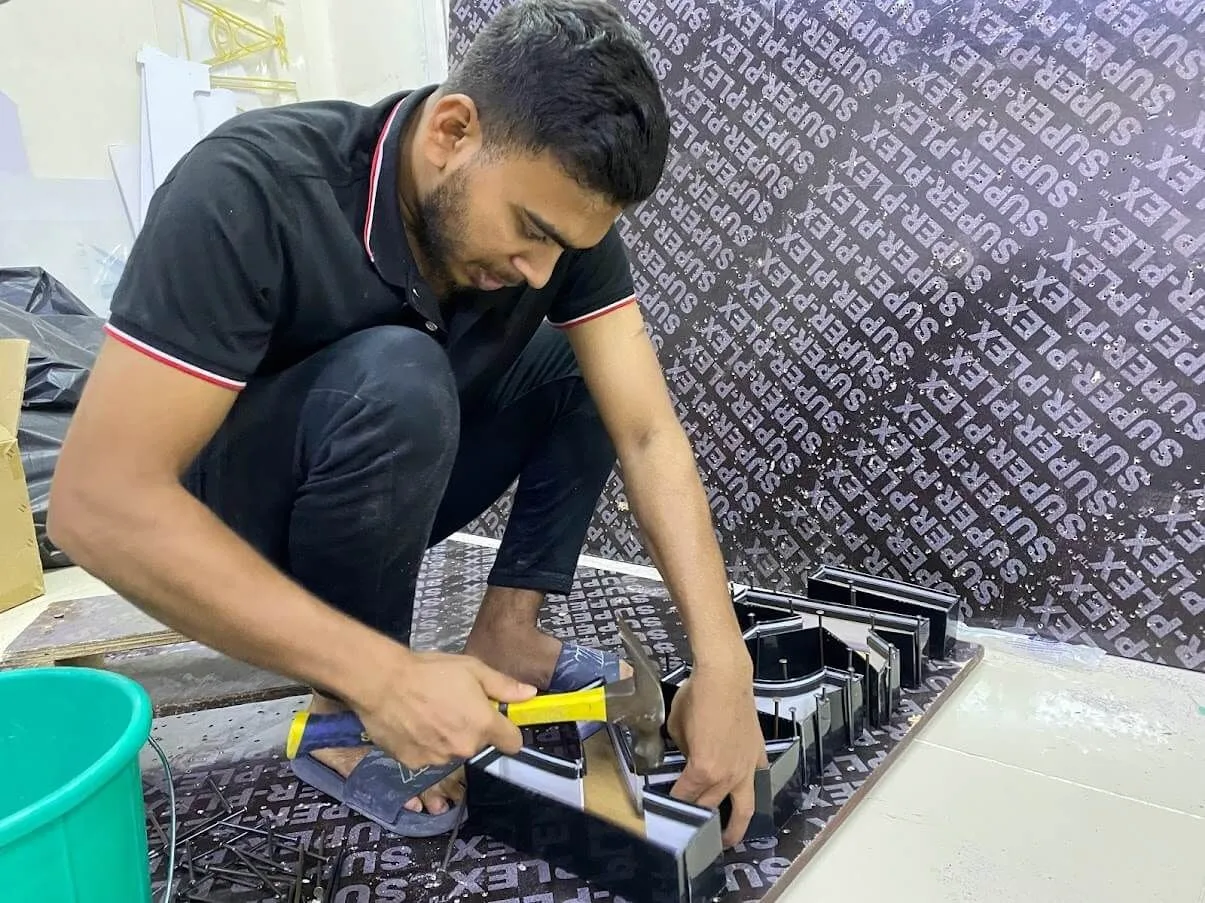
Bayan Signage technician assembling a sign in the Ajman workshop
Assembly in our Ajman workshop
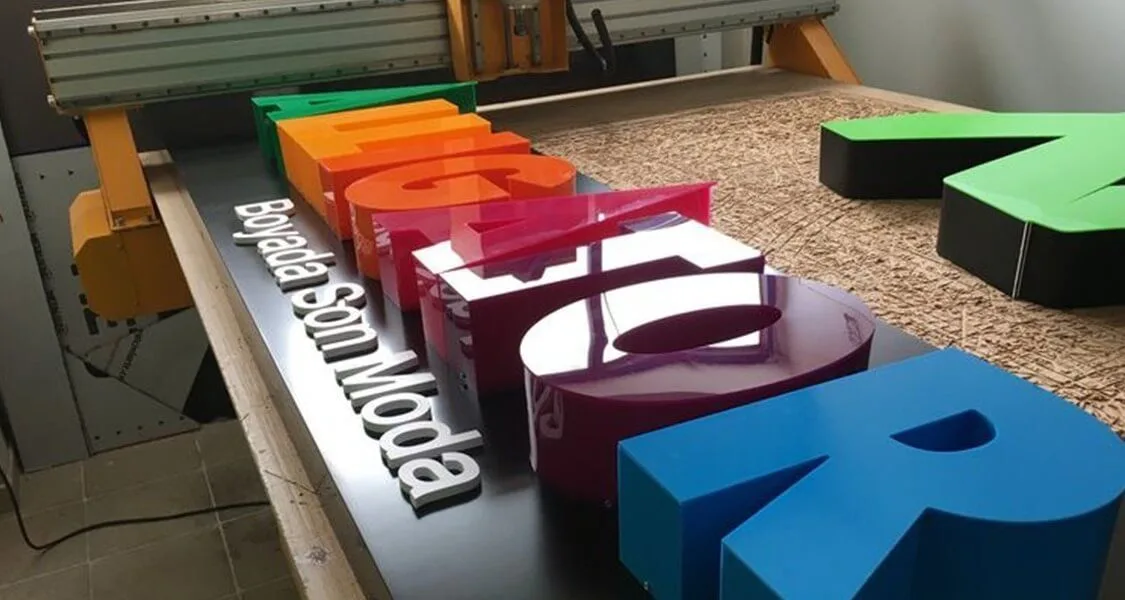
CNC-cut acrylic sign parts on the router bed at the Bayan Signage factory
CNC-cut acrylic parts on the router bed
Stainless steel sign components on the fabrication bench in Ajman
Stainless steel work on the fabrication bench
Expert advice

Advice from our safety signage team

We review a lot of chemical areas. These are the issues we raise most often, and they matter more than the choice of font or colour.

Name the hazard class on every door

A generic 'Danger chemicals' sign on every store tells a firefighter nothing useful. Each door should show the actual hazard classes inside: flammable, corrosive, toxic, oxidising. If a store holds three classes, it gets three triangles at the same size, side by side, rather than one sign with tiny symbols squeezed together. When the stock changes, the sign changes with it.

Area signs and container labels are different jobs

The red-bordered GHS diamonds on drums and bottles come from the supplier and describe that container. Area signs on doors, walls and fences use ISO 7010 yellow triangles and describe the room or zone. Most sites need both. We make the area signs, and we flag it when a client expects us to label containers that should carry the supplier's own GHS label.

Sign the bund, not the tank shell

For diesel and chemical tanks, the sign belongs on the bund wall or compound gate, where people approach, at about 1.5 m to its centre. On the tank shell it is hidden by pipework, sits on a hot curved surface and cannot be read until you are already inside the bund. For tanks seen from a road, 400 x 600 mm is a sensible minimum.

Test before you trust a data sheet

Laminates that cope well with acids can fail with alcohol-based cleaners, and the reverse is also true. For pool chemicals, solvents or unusual process chemicals, we wipe a sample with your actual substance and leave it to stand before checking the print and laminate. It is a cheap test, and it tells us more than any brochure about how the sign will look in a year.

Keep the substance list changeable

Maintenance stores, labs and contractor compounds change their stock constantly. A fixed printed substance list is out of date within months. We fit a slot-in or write-on panel below the fixed warnings, so your team can update it as the chemical register changes, and the warnings themselves never need replacing.

Pricing

Chemical hazard signs price in Dubai: what affects the cost

We quote from your chemical register and the list of locations. Send those with a few photos, and you will usually receive an itemised quote, with materials, labour and installation shown separately, within 24 hours.

Build for the exposure

Laminated aluminium is economical in dry stores. Sealed polycarbonate and stainless plates cost more but last many times longer near acids, solvents and fumes.

Custom content

Standard warnings are quick. Site-specific substance lists, hazard diamonds with set ratings and combined boards need artwork and checking against your register.

Size

Tank compound signs and facade hazard diamonds need thicker panels and stronger fixings than door signs, adding material and installation time.

Changeable panels

Slot-in or write-on substance panels cost more than a fixed print but save reprinting whole signs when the stored chemicals change.

Sample testing

Testing a build against an unusual chemical adds a day to the programme but very little cost, and avoids a full set failing early.

Site access

Industrial plants and labs often require inductions, escorts and permits, and work near tanks may need hot work or confined space controls.

Approvals

Chemical hazard sign standards and inspections

Hazardous material stores are typically reviewed by Civil Defence during inspections, and sites in free zones such as JAFZA may also be checked by the free-zone authority's HSE team. What is expected depends on the substances, the quantities stored and the type of facility. We work from your HSE lead's list and the approved safety drawings, use ISO 7010 warning symbols, and confirm current requirements for the exact site.

Where a hazard diamond is requested, the ratings for health, flammability and reactivity must come from your HSE lead or consultant, based on the safety data sheets, not from the sign maker. We print exactly the ratings you approve. Main contractors and facility operators often have their own HSE signage standards as well, and we match those templates when they apply.

Why Bayan Signage

Why HSE teams choose Bayan Signage for chemical hazard signs

Built for the exposure

We specify each sign for its location, from dry stores to splash zones, and test samples against unusual chemicals before producing the full set.

Signed from your register

Every store is signed with the hazard classes it actually holds, and the schedule is returned to you with a code for each sign.

All in-house in Ajman

Printing, laminating, CNC routing, laser cutting and assembly happen in our own factory, so replacements match the originals years later.

Bilingual technical wording

Hazard terms are easy to translate wrongly. We check the Arabic carefully so staff and emergency responders read the same meaning.

Comfortable on industrial sites

Our crews work under inductions, permits to work and site HSE rules, and use stainless or nylon fixings as standard in chemical areas.

One set for the whole site

Chemical, PPE, no smoking, electrical and fire signs can be produced in one matched style, with one project manager from survey to handover.

FAQ

Chemical Hazard Signs questions we are asked most

What signs does a chemical storage area need?

Usually an ISO 7010 warning sign for each main hazard class stored, such as flammable, corrosive or toxic, an 'Authorised persons only' notice, any PPE required at the door, and often a substance list or hazard diamond for emergency responders. Exact requirements depend on the chemicals, quantities and authority, so your HSE lead confirms them and we sign to that list.

What is the difference between GHS labels and chemical hazard signs?

GHS labels are the red-bordered diamond pictograms on chemical containers, supplied by the manufacturer and describing what is in that container. Chemical hazard signs are area signs on doors, walls and fences, using yellow ISO 7010 warning triangles to describe the hazard in a room or zone. Most sites need both, for different purposes.

How much do chemical hazard signs cost in Dubai?

The cost depends on the build needed for each exposure, the number of locations, sizes and any custom substance panels. A few laminated door signs for a dry store cost far less than sealed signs for a pool plant room. Send your chemical register and photos, and we will send an itemised quote, usually within 24 hours.

Which material lasts best near chemicals?

It depends on the chemical. Graphics sealed behind clear polycarbonate suit splash zones because the print never touches the liquid. Laminated aluminium works well in dry stores. Ordinary printed PVC is the weakest choice near acids or solvents. When the chemical is unusual, we test a sample against it before producing the full set.

Do chemical stores need a hazard diamond?

Not always, but many industrial sites and some authorities expect one, because fire crews recognise it at a distance and it summarises health, flammability and reactivity at a glance. Whether you need one, and the ratings shown, should come from your HSE lead or consultant. We print exactly the ratings they approve.

Where should a chemical hazard sign be placed?

On the door leaf or beside the entry, at eye level, so it is seen before anyone opens the door. For outdoor tanks, the sign goes on the bund wall or compound gate rather than the tank shell. Large stores and compounds usually need a sign on each approach and at every entry point.

How long do chemical hazard signs last?

In dry indoor stores, laminated aluminium signs last many years. In splash zones and corrosive atmospheres, life depends heavily on the build: sealed polycarbonate and stainless fixings last far longer than ordinary prints, which can fail within months. We recommend inspecting signs in chemical areas every few months and replacing any that have softened or faded.

Do you install chemical hazard signs across the UAE?

Yes. We make every sign in Ajman and install in industrial areas, free zones and plants across Dubai, Sharjah, Ajman, Abu Dhabi, Ras Al Khaimah, Umm Al Quwain and Fujairah. Our crews follow your site inductions and permit procedures, and the survey is free in Dubai, Sharjah and Ajman.

Free quote

Get a quote for chemical hazard signs

Send your logo, the fascia size and a site photo. Our estimating team replies with options and an itemised price, usually within 24 hours.

  • Call or WhatsApp +971 56 637 2656
  • Workshop: Alam Square, Industrial Area 2, Ajman
  • Sunday to Thursday, 08:00 to 18:00