In-house CNC and laser · Ajman

CNC Cutting in Dubai: Routing and Laser Cutting for Signs

Bayan Signage does its own CNC cutting and laser work in its factory in Ajman. We route acrylic, ACP, aluminium and foam to ±0.1 mm laser-cut stainless steel, mild steel, acrylic and wood, and engrave nameplates and plaques, producing the parts for every sign we make, each checked against the approved drawing before it moves on to finishing.

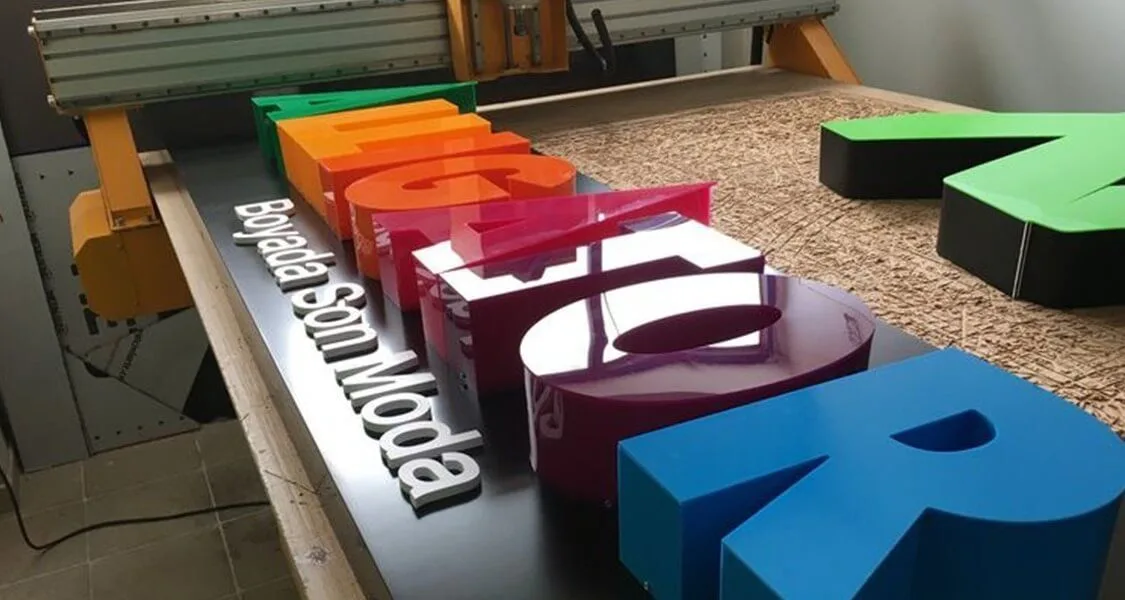
Colourful acrylic letters on the router bed after CNC cutting in the Bayan Signage workshop
2016Factory established in Ajman
500+Clients across the UAE
In-houseDesign, fabrication and installation
24 hTypical quote turnaround
Prepared by Bayan Signage production & estimating teamFactory: Alam Square, Industrial Area 2, AjmanUpdated
CNC Routing & Laser Cutting in the UAE

CNC cutting at the heart of our sign factory

CNC cutting is where almost every sign we make takes shape: a computer-controlled router or laser follows a vector file to cut flat parts that become letter faces and backs, ACP fascia trays, push-through acrylic, stainless returns, display pieces and installation templates. It is for brands, fit-out contractors, designers and architects who need signage parts cut accurately and repeatably, whether that is one reception logo or two hundred identical door signs for a hospital.

The machine is rarely what goes wrong; the decisions around it are. A router leaves an inside-corner radius equal to half its bit, so a 3 mm bit cannot cut a sharp inside corner. A laser gives acrylic a flame-polished edge but darkens wood. A push-through letter cut on the same line as its hole will jam once summer heat and paint thickness are added. Our operators check every file for closed paths and scale, choose the process by material and edge, and measure the first part before a batch runs.

Bayan Signage cuts everything in-house at Alam Square, Industrial Area 2, Ajman, alongside metal fabrication, powder coating, printing and LED assembly, so cut parts move straight into the rest of the sign without leaving the building. Our draftsmen produce the cutting files from the approved shop drawing, which means the part on the router bed matches the version the client signed. We have run this workshop since 2016 for more than 500 clients across the UAE.

Trusted by 500+ UAE businesses, including

Al-Futtaim logoAl Ghurair logoMultiply Group logoAriston Group logoCARS24 logoDouble A logo
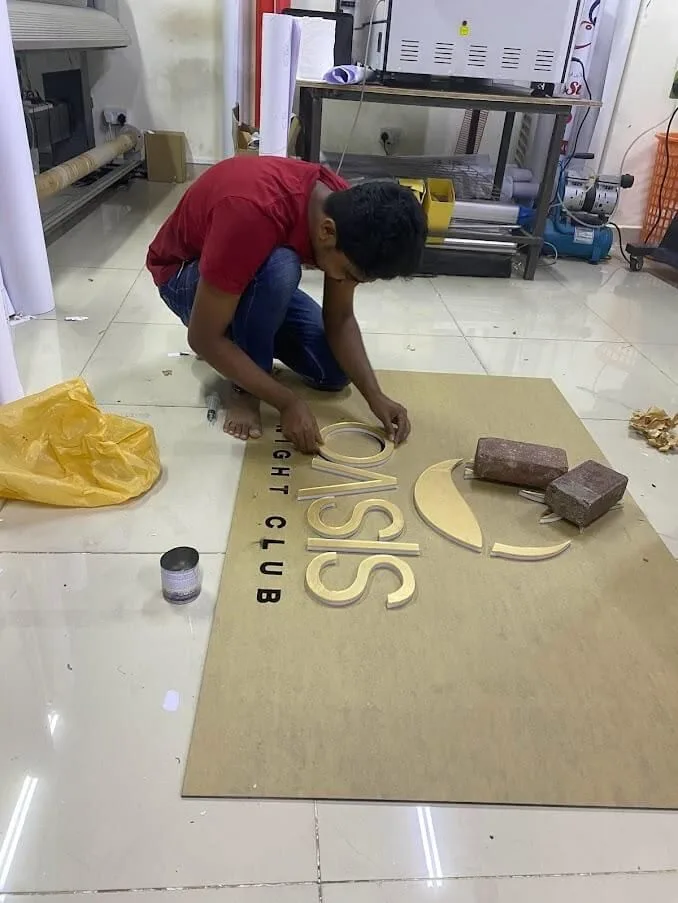
Technician preparing freshly cut letters on the workshop floor after CNC cutting
Our process

How CNC cutting works in our Ajman factory

  1. File check

    We open every file at 1:1 and check for closed paths, outlined text, duplicate lines and scale. Arabic dots and fine strokes are checked at real size, and offsets added where parts must fit into each other.

  2. Material and nesting

    The material, thickness and colour are confirmed and parts are nested onto standard sheets to cut waste. Protective film stays on acrylic, and grain direction is considered on wood.

  3. Process and settings

    Router bit, speed and number of passes are set for the material, accepting the bit radius in inside corners. Laser power and speed are set for the thickness, allowing for the kerf, or for depth when engraving.

  4. First-off check

    On any repeat job the first part is measured against the drawing or a printed template before the batch runs, so an error is found on one part rather than fifty.

  5. Cut and finish edges

    Parts are cut, removed carefully and deburred, sanded or polished as required. Visible router-cut acrylic edges are polished, and metal edges cleaned ready for welding or coating.

  6. On to fabrication and QC

    Cut parts go straight to welding, powder coating, printing or LED assembly in the same building, and the finished sign is inspected against the approved artwork before dispatch.

Specification

CNC cutting specification: materials and methods

This is how we cut the materials we use most. The final method depends on thickness, detail and the edge you want to see.

MaterialOur standard processAlternative or finishWhy it matters
Cast acrylicLaser cut for detail, routed for thick sheetEdge polishing after routingLaser leaves a clear polished edge; thick sheet can show a slight taper on the laser.
ACPCNC routed and V-grooved for foldingRouted push-through aperturesRouted and folded trays give crisp returns without visible joints.
Aluminium sheetCNC routed with metal-cutting bitsPowder coating to any RALRouted aluminium is light, rigid and holds its shape in UAE heat.
Stainless steelLaser cut faces, backs and flat lettersBrushed, mirror or PVD; engraved, paint-filled textAccurate laser outlines weld cleanly into returns.
Mild steelLaser cutPrimer and powder coatStrong and economical for frames and brackets once protected from rust.
Wood and plywoodLaser cut and laser engravedSealed for outdoor useThe laser darkens the edge, which suits natural and rustic brand looks.
PVC foam boardCNC routedPainted or printed facesLight and clean-cutting for indoor use; it warps and yellows in direct outdoor sun.
Our work

CNC cutting and laser work by Bayan Signage

Colourful CNC-cut acrylic 3D letters on the router bed in the Bayan Signage workshop
Coloured acrylic letters on the router bed
Technician preparing CNC cut letters on the workshop floor before assembly
Preparing cut letters on the workshop floor
Brushed stainless steel 3D letters fitted to a black backing panel on the workshop bench
Brushed stainless letters on a black backing panel
Letters with brushed metal returns and white cut acrylic faces in our workshop
Brushed metal returns with white acrylic faces
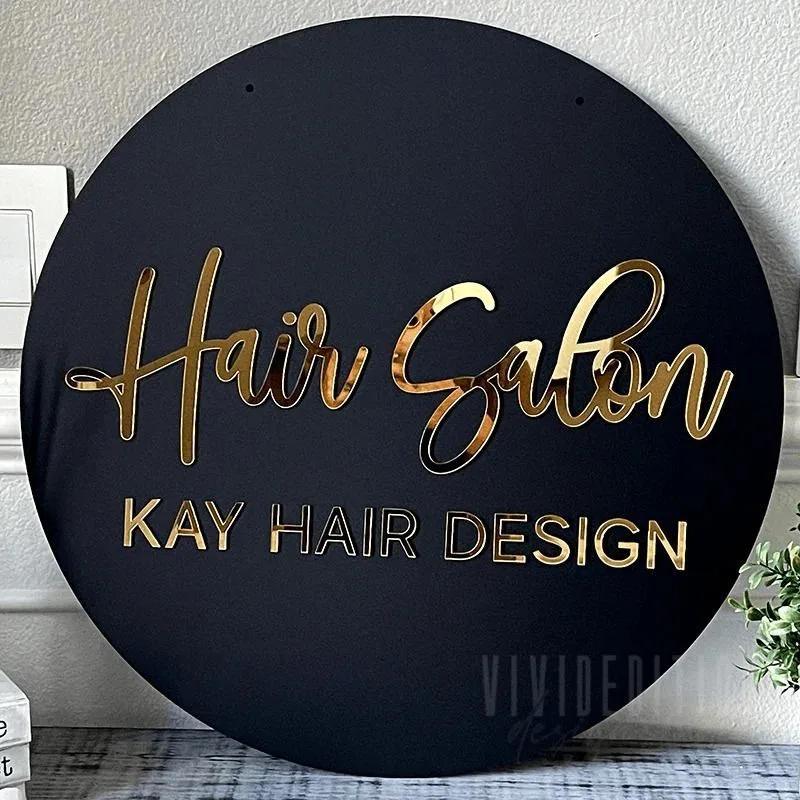
Round black plaque with cut gold acrylic script lettering for a hair salon
Gold acrylic script on a round black plaque
Expert advice

Advice from our CNC and laser operators

These are the file and material points we raise most often. Getting them right before CNC cutting starts saves a sheet, a day and sometimes the design.

Keep strokes at least 1.5 times the material thickness

A flat-cut letter has to survive handling, fixing and a few summers on a wall. As a rule of thumb, keep the narrowest stroke at least 1.5 times the material thickness: a 10 mm acrylic letter needs strokes of 15 mm or more, or it snaps at its thinnest point. Fine script logos and small Arabic dots often need slightly heavier weight or a thicker backing piece, which we propose on the first proof.

Expect rounded inside corners on routed parts

A router bit is round, so every inside corner carries a radius of half the bit diameter: 1.5 mm with a 3 mm bit, 3 mm with a 6 mm bit. Outside corners stay sharp. If a design depends on crisp inside corners, such as a stencil font, we either laser cut it where the material allows or use a smaller bit with more passes. Telling us early avoids a part that looks soft where the artwork was sharp.

Send vectors at 1:1 with text in outlines

Live text changes if the font is not installed on our system, and Arabic shaping can break entirely. Open paths cut as broken lines, duplicate lines cut twice and scorch acrylic, and a logo pasted as a JPG cannot be cut at all until it is redrawn. Send AI, PDF, DXF or SVG at full size, with every font converted to outlines. Clean files go straight to toolpath; messy ones add a day of redrawing.

Offset push-through letters from their holes

Acrylic expands in summer heat, and paint adds thickness to the edge of a hole in ACP or aluminium. A push-through letter cut on the same line as its aperture drops in perfectly in the workshop and can jam or crack in July. We offset the hole by a few tenths of a millimetre per side, so the letter sits snugly without stress all year round.

Choose outdoor thickness for the sun

Thin acrylic and PVC foam cut beautifully and then bow when the sun heats one face more than the other. For outdoor flat-cut parts we recommend 5 mm acrylic as a minimum, and aluminium or ACP for anything large or facing the afternoon sun. Fixings should allow for movement through slotted or oversized holes with washers, because a panel pinned tight at every hole will crack itself in summer.

Pricing

CNC cutting price in Dubai: what affects the cost

CNC cutting is quoted from your files, so there is no fixed rate per sheet. Send vector files, material, thickness, quantity and the edge finish you need, and we usually return an itemised quote within 24 hours, separating material, machine time and finishing.

Material and thickness

Thicker sheet costs more and cuts more slowly, especially on the laser. Coloured cast acrylic, mirror finishes and stainless steel add material cost.

Cut length and detail

A rectangle cuts in seconds; an intricate logo with many small inside shapes takes far longer. Machine time follows total path length and the number of shapes.

File preparation

Clean, scaled vector files go straight to toolpath. Files with open paths, live text, raster images or the wrong scale need redrawing first.

Edge finishing

Raw routed edges are quickest. Polished acrylic edges, sanded wood or deburred metal add hand work, particularly on parts with many curves.

Quantity and nesting

Repeat parts nested on a sheet reduce the cost per piece. A one-off part on a full sheet carries more material and set-up cost.

Further fabrication

Cut parts that go on to welding, powder coating, printing or LED assembly are quoted as part of the finished sign rather than as cutting alone.

Approvals

CNC cutting for compliant signs: materials and approvals

Cutting itself needs no permit, but what we cut often ends up in a submission. Where ACP forms part of a building facade or a large fascia, the UAE Fire and Life Safety Code and the authority reviewing the sign generally expect fire-rated core panels, and many landlords ask for the panel's data sheet. We state the panel grade on the quote and confirm the requirement for your building.

Approved signs also have to match their drawings. Dubai Municipality, Sharjah and Ajman municipalities and free-zone authorities review the elevation and the wording, often checking the Arabic against the trade licence. Our CNC cutting files are generated from the approved revision of the shop drawing, so the cut letters match what was submitted. Rules vary by location, so we confirm them for each site.

Why Bayan Signage

Why businesses choose Bayan Signage for CNC cutting

Router and laser under one roof

CNC routers for acrylic, ACP, aluminium and foam and laser cutters for cutting and engraving work side by side in our Ajman factory.

Accurate to ±0.1 mm

Our CNC routers cut to ±0.1 mm, far tighter than any wall a part is fixed to, so letters, faces and apertures fit first time.

Files checked by draftsmen

Our technical draftsmen check every file and produce cutting paths from the approved drawing, so the part matches what the client signed.

Straight into fabrication

Cut parts move directly to welding, powder coating, printing or LED assembly in the same building, with no outsourcing and no waiting for deliveries.

Checked before dispatch

First-off parts are measured before a batch runs, and every finished sign is inspected against the approved artwork before it leaves the factory.

Visit while we cut

You are welcome to visit our factory at Alam Square, Industrial Area 2, Ajman, during production and see your parts on the machine.

FAQ

CNC Routing & Laser Cutting questions we are asked most

How much does CNC cutting cost in Dubai?

It depends on the material and thickness, the total cut length and level of detail, file preparation, edge finishing and quantity. A batch of simple acrylic shapes costs far less than an intricate logo in thick stainless steel. Send your files, material and quantity, and we will send an itemised quote, usually within 24 hours.

What is the difference between CNC routing and laser cutting?

CNC routing cuts with a spinning bit and suits ACP, aluminium, foam and thicker acrylic; it leaves a small radius in inside corners. Laser cutting uses a focused beam, handles very fine detail and gives acrylic a polished edge, and we also use it for stainless steel, mild steel and wood. The same lasers engrave text and logos into laminate, acrylic and wood. Material, thickness and edge finish decide which we use.

Which is better for acrylic letters, laser or router?

For most acrylic letters, laser cutting gives the cleanest result, with a clear polished edge and sharp detail. Routing is better for very thick acrylic, large batches of simple shapes, or where a matt edge that will be polished later is acceptable. Both are accurate; the choice usually comes down to edge finish and detail.

What file formats do you accept for CNC cutting?

Vector formats are best: AI, PDF with vector content, DXF or SVG. Files should be at 1:1 scale with closed paths, no duplicate lines and all text converted to outlines. Raster images such as JPG or PNG cannot be cut directly and need tracing or redrawing first, which adds time and may change small details.

Can you cut parts from my own design files?

Usually, yes, depending on material and quantity. Send vector files at full scale with text converted to outlines, along with the material, thickness and quantity you need. We check the files, tell you about any details that will not cut cleanly, and quote. Clean files are the fastest route to a quick turnaround.

What is the smallest detail you can cut?

It depends on material and method. Laser cutting handles very fine detail on thin acrylic. Routing is limited by the bit, commonly around 3 mm for sign work, so inside corners are slightly rounded. Strength matters too: very thin parts may cut cleanly and still break during handling or fixing, so we check minimum stroke widths on the first proof.

Do you cut metal for signs?

Yes. Our laser cutters cut stainless steel and mild steel for letter faces, backs, flat letters and brackets, and our CNC routers cut aluminium sheet. We also engrave stainless, aluminium and brass nameplates. Metal parts then go to welding, polishing or powder coating in the same factory. Send the material, grade and thickness, and we confirm the best process for the part.

How long does CNC cutting take?

Cutting from clean files is usually one of the quicker stages once material is in stock, and cut parts for 3D letters are planned inside the letter programme. Large batches, metal parts that need welding and finishing, and files that need redrawing take longer. We give a realistic date with the quote.

Free quote

Get a quote for CNC routing & laser cutting

Send your logo, the fascia size and a site photo. Our estimating team replies with options and an itemised price, usually within 24 hours.

  • Call or WhatsApp +971 56 637 2656
  • Workshop: Alam Square, Industrial Area 2, Ajman
  • Sunday to Thursday, 08:00 to 18:00